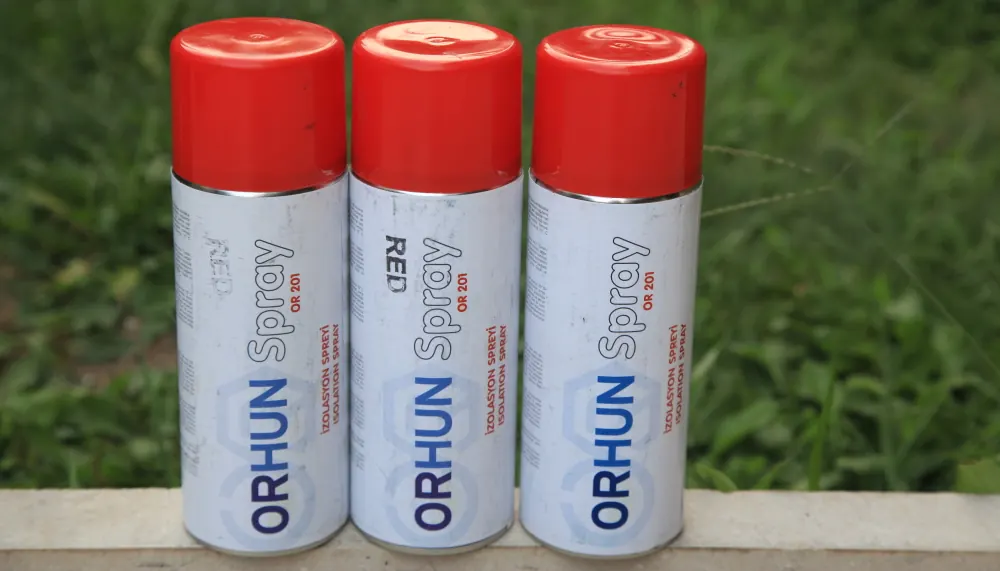
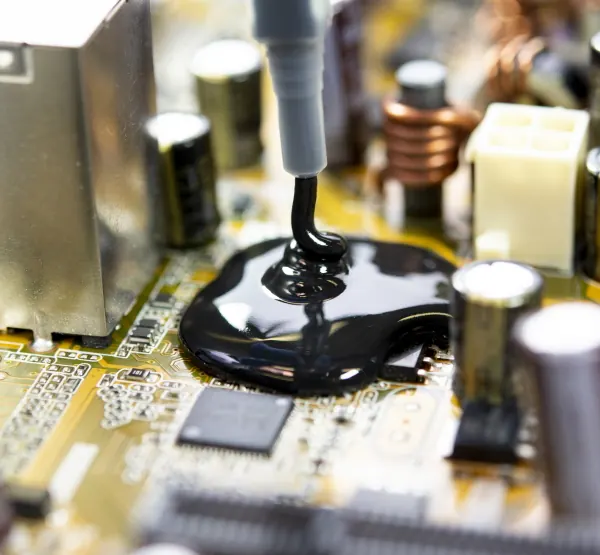
Electronic Board Insulating Varnish (Conformal Coating)
Conformal coating for PCBs: a thin insulating film against moisture, dust and corrosion.
Technical information
| Product type | Electronic board insulating varnish (conformal coating) |
|---|---|
| Use | Printed circuit boards, components and solder joints |
| Protection | Moisture, dust, dirt, oxidation and corrosion |
| Chemical resistance | Oils, water, most acids and alkalis |
| Dielectric strength | High, retained when wet; value in the product TDS |
| Application | Brush or spray |
| Drying time | In the product TDS |
| Thinning | Thinner type and ratio in the product TDS |
| Masking | Required on connectors, contacts, trimmers and test points |
Drying time, viscosity and pack sizes are given in the product TDS.
Electronic board insulating varnish is an insulating coating applied as a thin film over printed circuit boards (PCBs) to protect the board, its components and solder joints from moisture, dust, dirt and corrosion. It is also known as conformal coating, because the thin film follows the shape of the board and components and wraps every surface. Orhun Kimya manufactures this varnish at its plant in Beylikdüzü, Istanbul.
Moisture, condensation, dust and chemical vapours are among the most common causes of electronic failures. A damp layer of dirt on the board becomes conductive, and leakage current, short circuits and corrosion start between leads and tracks. The insulating varnish covers exposed conductive surfaces, reduces this risk and helps extend the service life of the board.
Where is it used?
- Control, automation and PLC boards,
- Power supply, drive and inverter boards,
- Electronics working in damp, dusty or outdoor conditions: lighting, pump, air-conditioning and meter control boards,
- Boards whose protection was damaged by repair or re-soldering,
- The final protection step in PCB assembly.
Properties
- Protection from moisture and dirt: forms a thin, continuous film that keeps moisture, dust and dirt away from conductive surfaces.
- Insulates even when wet: the film keeps its high dielectric strength in wet conditions, so it suits equipment running in very humid climates and at high temperatures.
- Chemical resistance: resists oils, water and most acids and alkalis.
- Corrosion protection: protects component leads, solder joints and exposed tracks against oxidation.
- Easy application: applied by brush or spray, in production and in the repair shop.
How is it applied?
- Disconnect power and let the capacitors discharge.
- Clean the board: no flux residue, oil, fingerprints or dust should remain. On site, a PCB maintenance spray can remove dirt and moisture.
- Dry the board completely; varnish applied to a damp board traps the moisture under the film.
- Mask connectors, relay and switch contacts, trimmers, test points and heat-sink contact surfaces with tape or caps.
- Stir the varnish well and apply a thin, even coat by brush or spray. Try to reach the edges and undersides of components.
- If needed, apply a second thin coat once the first has dried; two thin coats work better than one thick coat.
- Do not power the board before it has dried, and remove the masking carefully afterwards. Drying time and thinning ratio are given in the product TDS.
How to choose, what to watch
First decide what you need: cleaning and drying the board, or permanent protection? A maintenance spray cleans and evaporates without leaving a film; an insulating varnish cures into a permanent protective layer. The right order is cleaning and drying first, then coating.
If the board faces heavy moisture, contact with water, vibration or impact, a thin film may not be enough and the module must be fully potted. For that, see our casting resins and the EPC-620 flame-retardant epoxy potting resin. Motor and transformer windings need impregnating varnishes, not board varnish; see electrical insulating varnish.
Tell us the operating temperature of the board, its environment (indoor or outdoor, humidity, chemical vapours), your application method and whether the board will be repaired later; we will send the suitable product and its TDS. For floors in electronics production areas, see antistatic floor coating.
Common mistakes
- Coating a dirty or damp board: flux residue and moisture stay under the film and become a source of failure.
- Not masking connectors and contacts: varnish on contact surfaces causes poor contact.
- Applying one thick coat: causes runs, bubbles and slow drying.
- Powering the board before it has dried.
- Thinning by eye or with the wrong thinner: thinner type and ratio are in the TDS.
For the technical data sheet (TDS) of our electronic board insulating varnish, write to us via the form or WhatsApp.
Questions
What does PCB insulating varnish do?
It covers the printed circuit board with a thin insulating film that protects it from moisture, dust, dirt and corrosion. This reduces failures caused by leakage current, short circuits and oxidation.
Is conformal coating the same as PCB varnish?
Yes. A thin protective film that follows the shape of the board and components is called a conformal coating; our electronic board insulating varnish does this job.
What is the difference between a maintenance spray and an insulating varnish?
A maintenance spray cleans the board, removes moisture and evaporates, leaving no permanent film. An insulating varnish is applied to a clean, dry board and forms a permanent protective layer.
How is PCB varnish applied?
After the board is cleaned, dried and the connectors are masked, it is applied in thin coats by brush or spray. Two thin coats are better than one thick coat.
How long does PCB varnish take to dry?
Drying time depends on temperature and film thickness; the exact value is in the product TDS. Ask for it via the form or WhatsApp.
What is PCB varnish thinned with?
Whether thinning is needed, the thinner type and the ratio are given in the product TDS; ask for it via the form or WhatsApp. Do not thin by eye.
Which parts should be masked?
Connectors, relay and switch contacts, trimmers, test points and heat-sink contact surfaces. Varnish on these surfaces causes poor contact or heat-transfer problems.