
Motor winding varnish
Air-drying and baking winding varnishes for electric motors, generators and transformers. They penetrate the winding, bond the wires and protect against moisture, heat and dirt.
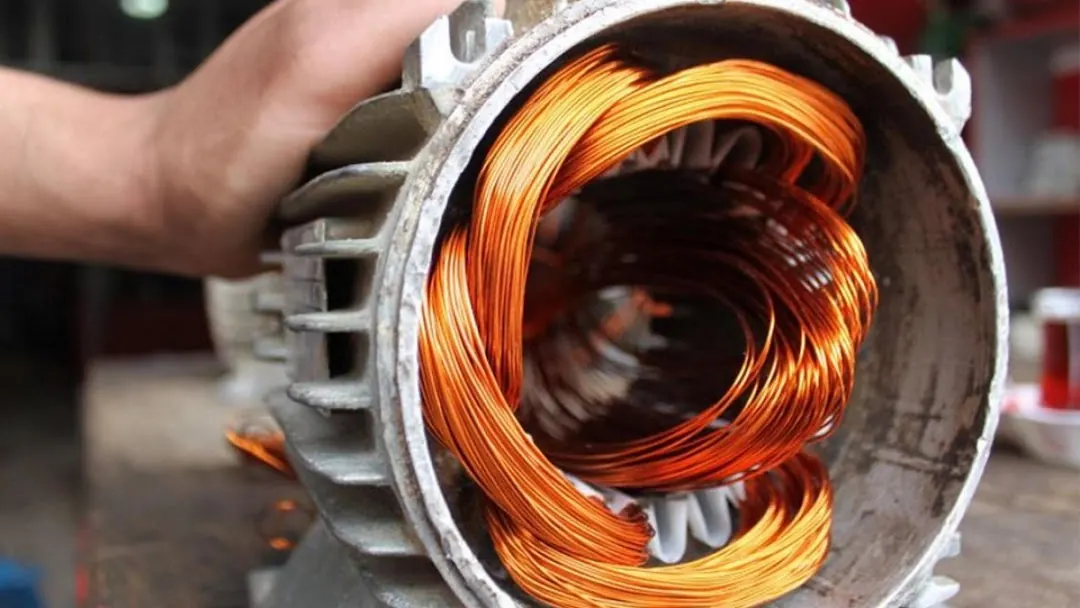
What is winding varnish?
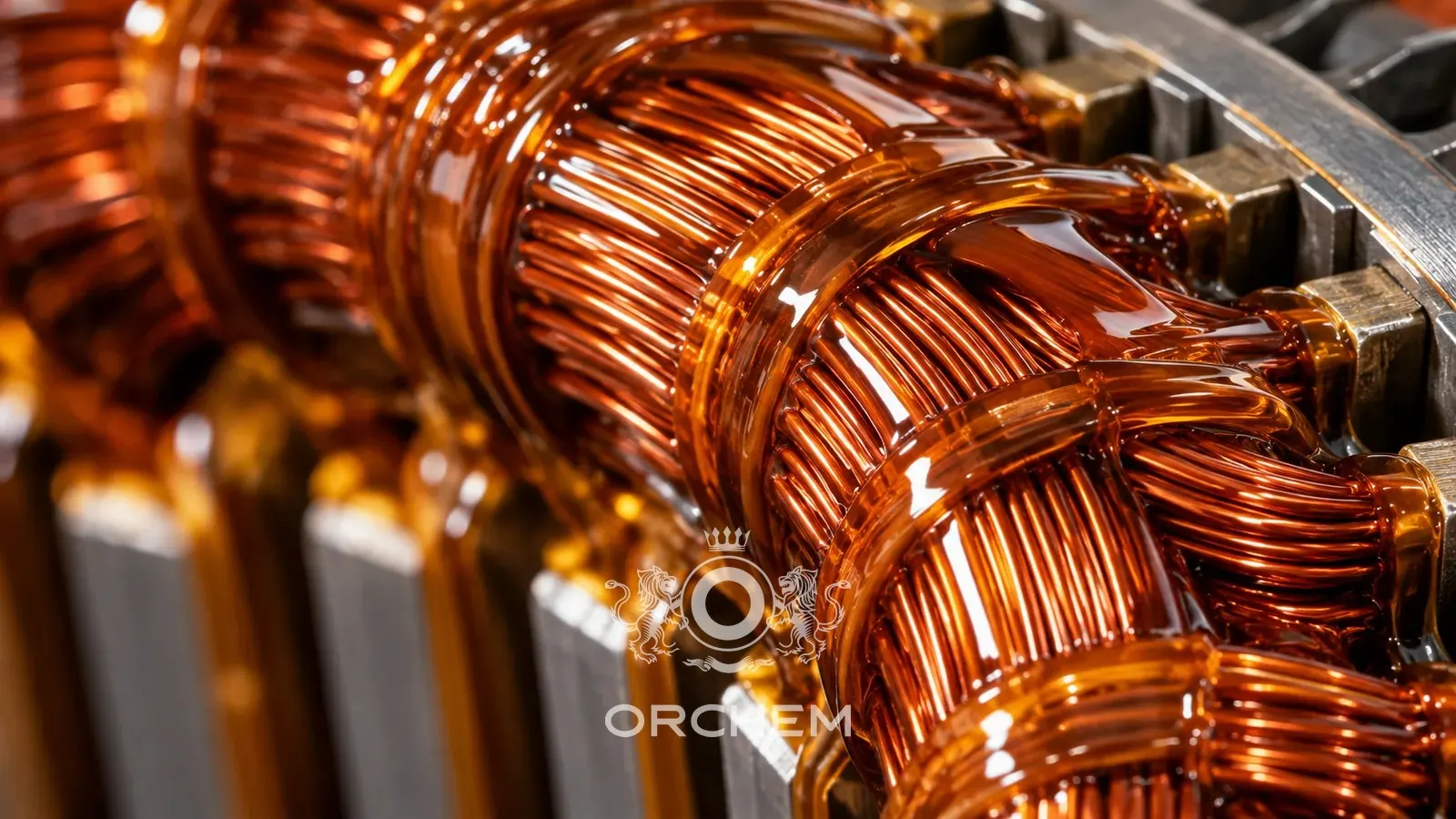
Winding varnish is a liquid insulating material applied to the windings of electric motors, generators and transformers after winding; as it hardens, it bonds the wires together and forms an insulating film over them. It protects the winding against moisture, dust, oil and vibration, helps dissipate heat and extends the life of the insulation.
At a glance
- Types: air-drying varnish dries at room temperature, baking varnish is cured in an oven; Orchem offers the air-drying OR 1xx series and OKA-501, and the baking OR 3xx series (OR-300: one-component, class H 180 °C).
- Thermal classes (IEC 60085): B 130 °C, F 155 °C, H 180 °C; the varnish class should equal or exceed the motor's insulation class.
- Application: dipping, VPI (vacuum pressure impregnation), brush or spray; beforehand the winding should be clean, dry and, where needed, preheated.
- Thinning: air-drying varnishes generally take 3 parts varnish to 1 part thinner (T-100 for OR 1xx, T-501 for OKA-501), while OR-300 takes T-300 at 2–8 % by volume; details in the thinner ratio guide.
- Class H 2K option: OR-114 polyurethane varnish cures at room temperature and resists refrigerant gases.
- Topcoat: OR-990 insulating lacquer (red, black, grey; 155–180 °C) gives the winding surface extra protection against external influences.
- Manufacturer: Orhun Kimya (Orchem brand) has been producing in Beylikdüzü, Istanbul since 1988; a detailed TDS for each product can be requested through the form on its product page.

Air-drying winding varnish
OR 1xx series: phenolic OR-100 (B) and OR-102 (F). No oven needed; dries at ambient temperature.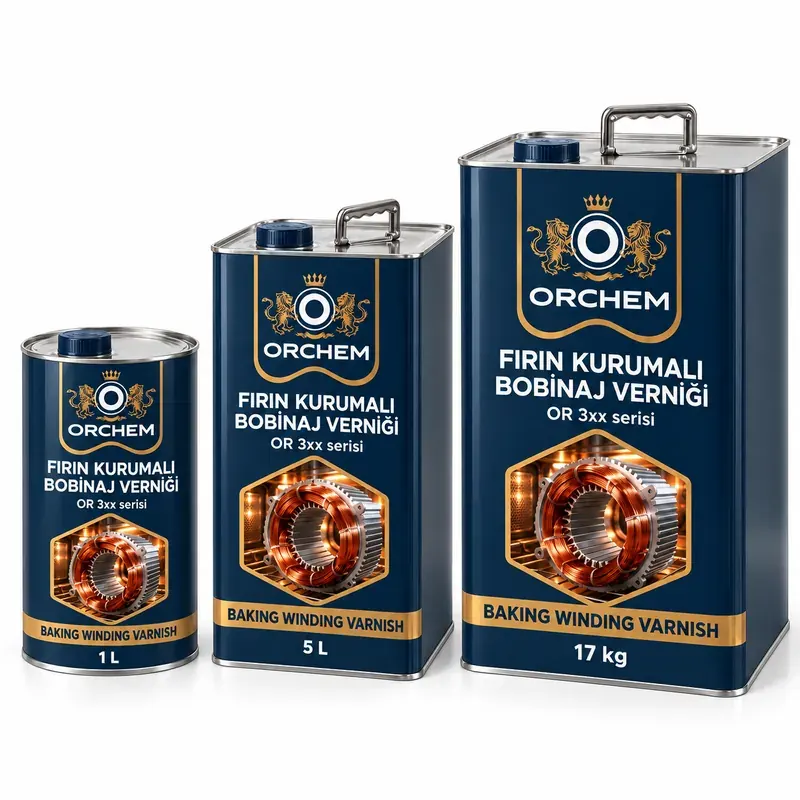
Baking winding varnish
OR 3xx series. OR-300: class H (180 °C), for dipping and VPI; the highest bond strength.
OR-114 class H varnish
2K polyurethane, class H (180 °C), refrigerant-gas resistant, no oven.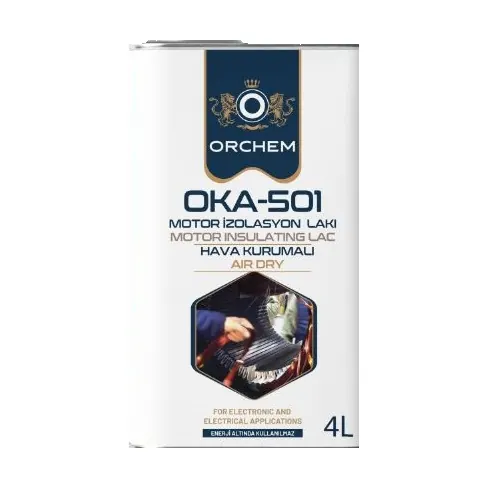
OKA-501 motor insulating lacquer
Class F (155 °C), very fast-drying air-drying lacquer for rewind shops. T-501, 4 L.
Armature varnish
Low-viscosity varnish for armature and rotor windings; holds wires in place at high speed.
Insulating topcoat lacquers
Anti-flash topcoat: OR-990 (155–180 °C) and epoxy OR-411 (H); red, black, grey.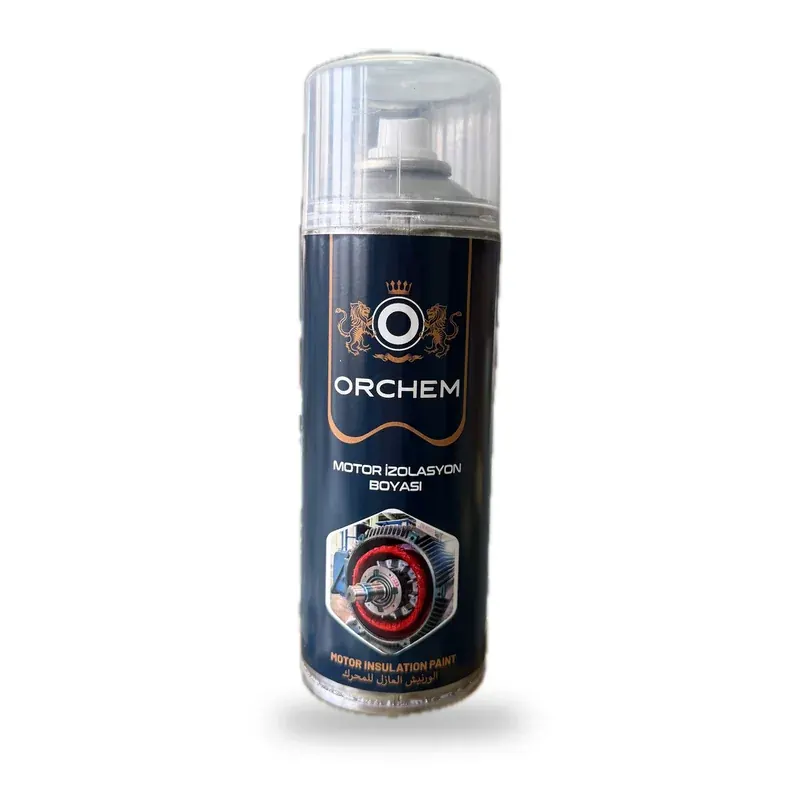
Motor insulating spray
Class F (155 °C) air-drying spray; coats windings, connections and terminals in one step.
Thinners
Cellulosic, synthetic, rapid and cleaning thinners, plus varnish thinners T-100, T-300, T-501.
An Orchem varnish for every motor and every workshop
Varnish series to choose by thermal class, curing method and application technique. We also produce custom formulations for specific strip-out requirements and special needs.
-
Air-Drying Motor Winding Varnish
OR 1xx series
Based on synthetic resin; cures at room temperature without an oven. Practical and economical for repair shops and field work.
- Dries fast, penetrates deeply
- Resistant to moisture, heat, acids and alkalis
- Glossy finish, stable hardness
-
OKA-501 Motor Insulating Lacquer
Air-drying · 4 L
Air-drying motor insulating lacquer for electrical and electronic applications. Dries at room temperature without an oven; thinned with T-501 thinner.
- Air-drying, no oven needed
- Thinned with T-501 (generally 3 : 1)
- 4 L tin
- Not to be applied to energized equipment
-
OR-114 Class H Air-Drying Varnish
Class H · 2-component
Two-component class H air-drying insulating varnish: A (varnish) and B (hardener). For windings that run at high temperature, without an oven.
- Class H thermal endurance (180 °C)
- Two-component: A varnish + B hardener
- No oven needed, cures at room temperature
- Request the TDS for mixing ratio and pot life
-
Baking Motor Winding Varnish
OR 3xx series
Cured in an oven according to the recommended curing schedule. For series production and windings that demand maximum durability.
- High bond strength — holds the wires firmly
- Resistant to hot transformer oil
- High heat and moisture resistance, good flexibility
-
Armature Varnish
Rotor · armature
Low-viscosity varnish for armature and rotor windings. Prevents wires from lifting in high-speed armatures and delays carbonization.
- Effective penetration into the winding
- High-speed motors and submersible pumps
- Easy, practical application
-
Insulating Top Coats and Paints
Anti-flash
A glossy, durable top coat for electrical machines after varnishing. Air-drying; adds extra protection against moisture and corrosion.
- Dries fast, leaves no marks
- Excellent moisture resistance
- Corrosion protection on steel surfaces
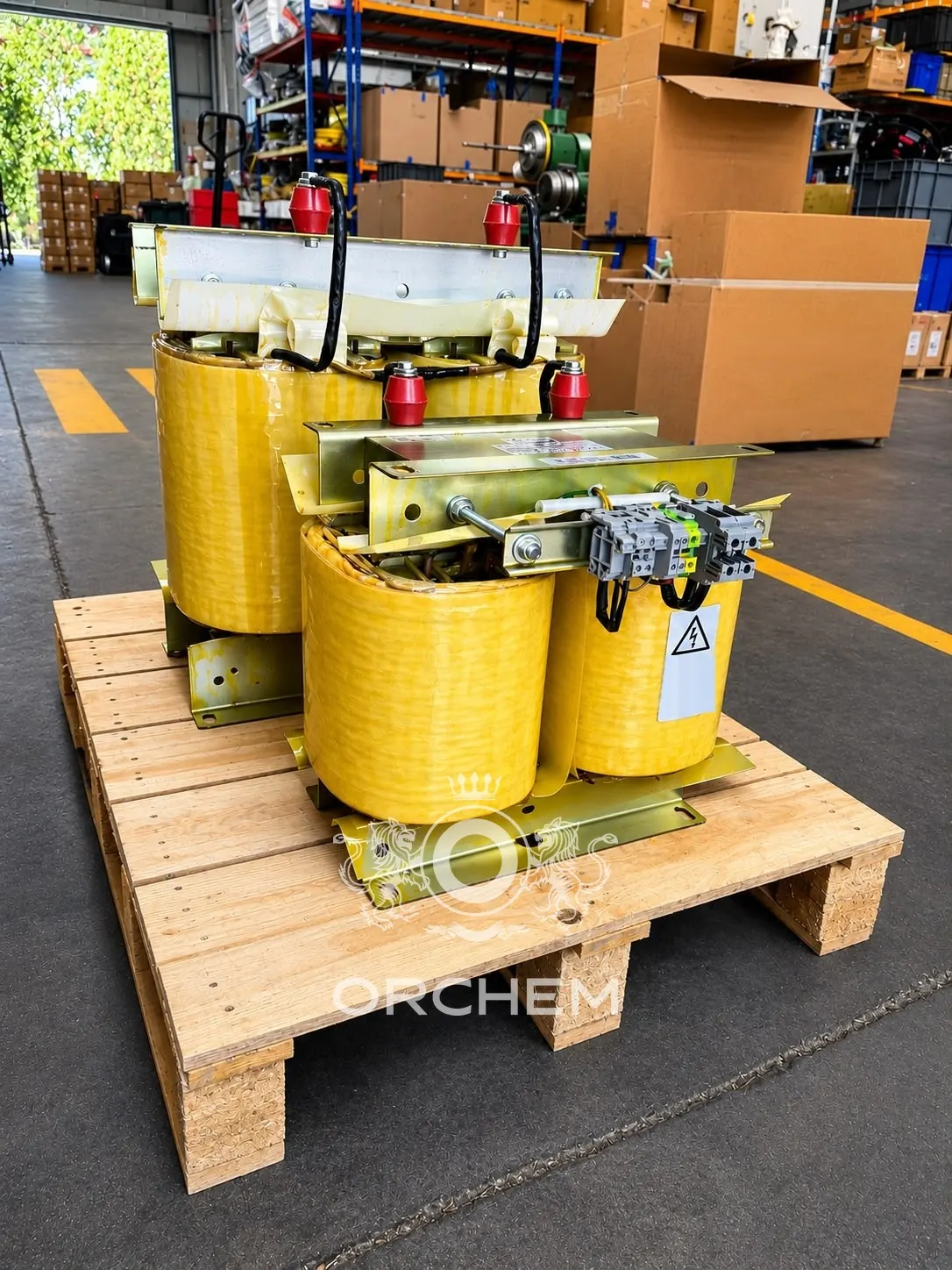
Transformer Insulating Varnishes
Transformer
Air-drying and baking insulating varnishes for low and medium voltage transformers, together with pole and insulating paints.
- LV / MV transformer windings
- Air-drying or baking options
- Transformer exterior paints

Variac Varnish
120–200 °C
A hard, heat-resistant insulating coating for the outer surface of variacs. Colorless, transparent, sediment-free; does not skin over in the dip tank.
- Spray gun, dipping or brush
- Heat resistance 120–200 °C
- Shelf life of at least 1 year in a cool, dry place
-
Motor Insulating Spray
Spray · Class F
Class F air-drying insulating paint that coats and insulates windings, connections and terminals in a single step after rewinding. Practical for repairs, touch-ups and field work.
- Protects against dust, moisture, mineral oils and weak acids/alkalis
- For low and medium voltage insulation
- Available in any RAL shade on request
Varnish is the invisible armor of the winding
Winding varnish is a solvent-based or solventless insulation system applied to the winding after it has been wound. The right varnish extends motor life and reduces failures and returns.
Electrical insulation
Fills the gaps between wires, increases dielectric strength and reduces the risk of short circuits.
Mechanical bonding
Turns the winding into a single solid body; stops wires from moving or lifting under vibration and at high speed.
Moisture and chemical protection
Forms a barrier against moisture, dust, oil, acids and alkalis; makes the difference in submersible pumps and harsh environments.
Heat transfer
By filling air voids with varnish, it helps carry heat from the winding to the housing and reduces hot spots.
Winding varnish types compared
Drying method, thinner and typical use of Orhun Kimya winding varnishes. Viscosity, drying time and the thermal class of each product are given in its TDS.
| Product | Drying | Thinner | Thermal class | Best for |
|---|---|---|---|---|
| Air-drying winding varnish | Air-drying, no oven | T-100 | B · 130 °C / F · 155 °C | Motor repair, field work, single motors |
| OKA-501 motor insulating lacquer | Air-drying, no oven | T-501 | F · 155 °C | Electrical and electronic uses; 4 L tin |
| OR-114 class H varnish | Air-drying, two-component | See TDS | H · 180 °C | Class H endurance without an oven |
| Baking winding varnish | Baking (oven) | T-300 | H · 180 °C (OR-300) | Series production, dip impregnation |
| Armature varnish | See TDS | See TDS | See TDS | Armatures and rotors, high speed, submersible pumps |
| Motor insulating spray | Air-drying, no oven | Not needed (ready spray) | F · 155 °C | Touch-up, connections and terminals, field work |
| Insulating topcoat lacquers | See TDS | See TDS | 155–180 °C / H (OR-990, OR-411) | Moisture and corrosion topcoat over varnish |
How hot does your motor run?
Class F up to 155 °C
Industrial motors and pumps; the most common class.
For this class:
The varnish class must be at least the class of the winding. Thermal classes follow IEC 60085. The class of each product is stated in its TDS.
Choose the right varnish in 3 steps
Determine the operating temperature
At what temperature does the motor or transformer run? What is the class of the enameled wire?
Select the thermal class
The varnish class must be at least equal to the winding class. Use the table.
Choose the curing and application method
Do you have an oven? Dipping, brush or spray? Write to us and we will recommend the most suitable Orchem varnish.
| Class | Max. temperature | Typical use |
|---|---|---|
| B | 130 °C | General-purpose small and medium motors |
| F | 155 °C | Industrial motors, pumps — the most common class |
| H | 180 °C | Heavy duty, high temperature, dry-type transformers |
Request the TDS for product-specific thermal class and technical data.
A good varnish needs good application
1 · Preparation
The winding must be clean, oil-free and dry. Preheat old motors to drive off moisture; a warm winding absorbs varnish better.
2 · Dip / brush / spray
When dipping, leave the winding immersed until bubbles stop rising. With brush or spray, work the varnish well into the winding.
3 · Draining
Let excess varnish drain off; pooled varnish lengthens drying time and leaves a thick, soft layer.
4 · Drying / curing
Observe the full drying time for air-drying products and the recommended temperature–time schedule for baking products.
About winding varnish
What is winding varnish?
Winding varnish is a solvent-based or solventless insulating varnish applied to electric motor and transformer windings after winding, protecting them from electrical and external influences. It penetrates between the turns, bonds the wires together and insulates against moisture and contamination.
What is the purpose of varnish in a motor winding?
Varnish fills the gaps between the wires and bonds them into one solid block. This adds a second layer of electrical insulation over the enamel, stops the wires from vibrating and rubbing, seals the winding against moisture, dust, oil and chemicals, and carries heat away from the copper to the stator core. A well-varnished winding runs cooler and lasts longer.
Which varnish is best for motor winding?
There is no single best varnish; the right one depends on four things. Its thermal class must equal or exceed the motor’s insulation class (B 130 °C, F 155 °C, H 180 °C). Without an oven, use an air-drying varnish; for series production, a baking varnish. For rewind shops, the fast-drying class F OKA-501 is a common choice; for refrigerant gases and chemicals, the two-component class H OR-114; for production lines, the baking OR 3xx series. Which winding varnish should you use?
Should I choose air-drying or baking varnish?
Without an oven, or for field and repair work, choose air-drying (OR 1xx); for series production and maximum durability, choose baking varnish (OR 3xx). Air-drying or baking winding varnish?
Which thermal class varnish should I use?
First determine the operating temperature of the motor and the class of the enameled wire. The varnish class must be at least equal to the winding class: class B 130 °C, class F 155 °C, class H 180 °C.
What is the process of varnishing motor windings?
Clean the winding and preheat it to drive out moisture; a warm winding takes varnish in better. Then dip it (or use VPI, trickle, brush or spray), keep it in the varnish until bubbles stop rising, let the excess drain and finally air-dry or bake it according to the varnish’s curing schedule. How to varnish a motor winding
Which thinner should be used for winding varnish, and at what ratio?
For air-drying grades, typically 1 part thinner to 3 parts varnish: T-100 for air-drying grades and T-501 for OKA-501. Baking grades are thinned with T-300 at 2–8 % by volume to keep the tank viscosity at 60 s DIN Cup 4. Which thinner for winding varnish, and at what ratio?
Can I get a technical data sheet (TDS) and price list?
Yes. Write to us via WhatsApp or e-mail with your requirements and we will send the TDS and current price list for the relevant product.
Do you offer custom formulations?
Yes. We develop custom varnishes according to strip-out type, viscosity, drying time and your application line.
Related reading
- Which winding varnish should you use?Choose the right varnish in 4 steps by thermal class, oven availability and motor type.
- Which thinner for winding varnish, and at what ratio?Which thinner for which varnish, what a 3:1 ratio means, and what too much thinner does.
- Why won't winding varnish dry, and why does it stay tacky?The 6 most common causes, a symptom-based diagnosis table and how to rescue varnish that won't dry.
- Air-drying or baking winding varnish?The difference between the two varnish types, when to choose each, and how to apply each correctly.
- How to varnish a motor windingDip and bake, VPI, trickle, brush and spray: how each works and which one fits your shop.
- Why is insulation resistance low after varnishing?Six causes of a low megger reading, a symptom-based diagnosis table and how to dry and retest.
- What is VPI? How is vacuum pressure impregnation done?The VPI steps, how it differs from dipping and pouring, which varnish to use and common mistakes.
- What is a thermal class? Class B, F and H insulation explainedWhat Class B, F and H mean, how to read a motor nameplate, and why varnish class must not be lower.
- How do you dry a winding before varnishing?Why moisture in a winding is a problem, how to clean and dry it, and how to check dryness with a megger.
- If the wire is enamelled, why do you still need winding varnish?Enamel vs varnish: gaps between wires, vibration, moisture, heat and class matching.
- Is an insulating topcoat needed?Impregnating varnish vs topcoat, when a topcoat is worth it and how to apply it.
- Electrical insulation glossaryShort, plain definitions of the terms used in varnishing windings, motors and transformers.
- How to make a resin cable joint? What is Protolin and how is it prepared?What Protolin is, how a resin-filled cable joint is made step by step, how to prepare the mix and common mistakes.