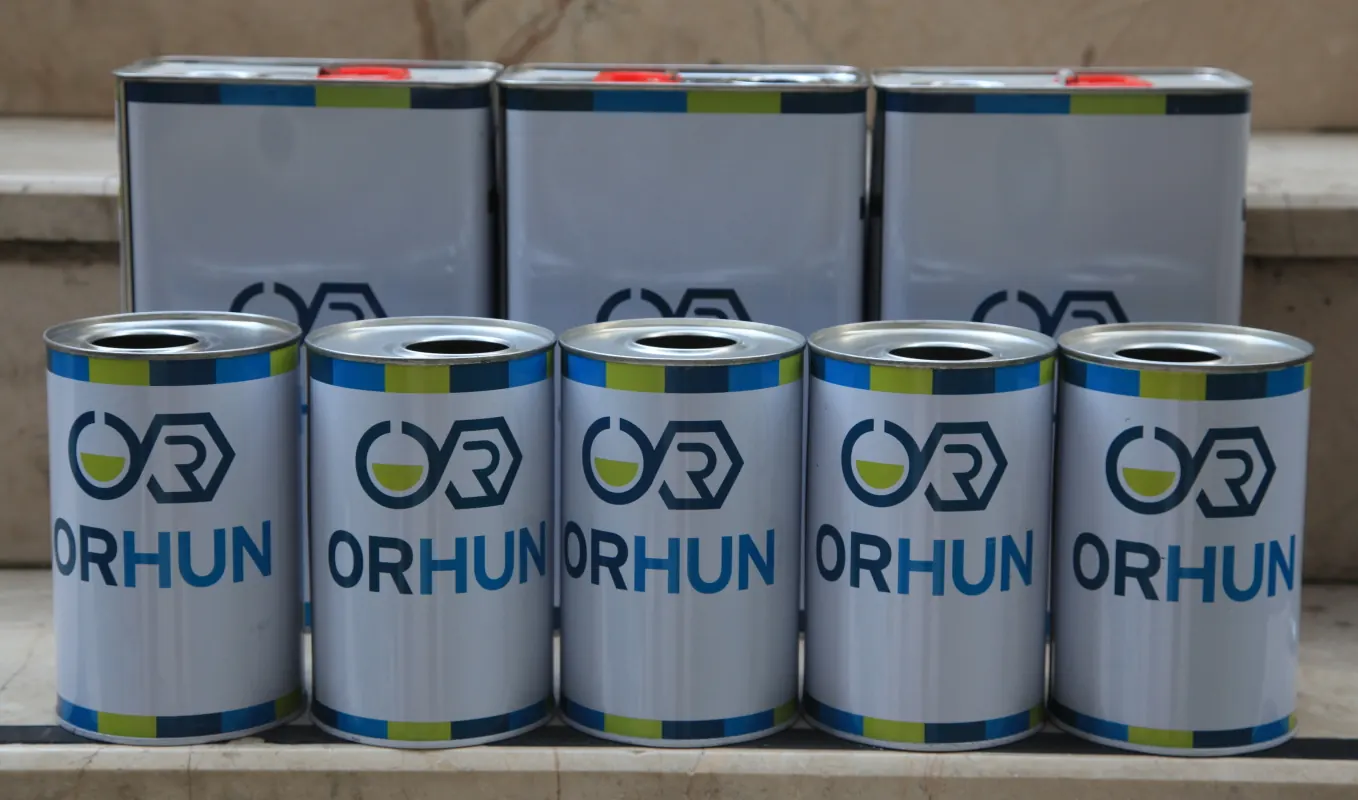
Polyurethane Paints and Varnishes
UV- and weather-resistant polyurethane topcoats that keep their gloss, and polyurethane insulating varnishes.
Technical information
| Type | Polyol + isocyanate hardener; two-component polyurethane paints and varnishes |
|---|---|
| Key feature | UV and weather resistance; keeps colour and gloss |
| Mechanical strength | Film resistant to scratching, abrasion and impact |
| Use | Outdoor topcoat, transformer tanks and steel equipment, repair paint, insulating varnish |
| Recommended system | Epoxy primer + polyurethane topcoat in heavy corrosion environments |
| Varnish options | Air-drying and oven-cured types |
| Insulating varnish | OR-114: 2K polyurethane, class H (180 °C), cures at room temperature |
| Application | Spray gun, brush or roller |
| Mixing ratio, pot life, drying | See the product TDS |
Drying time, viscosity and pack sizes are given in the product TDS.
Polyurethane paints and varnishes are industrial coatings that cure when a polyol-based component reacts with an isocyanate hardener, giving a film that resists UV light, weather and scratching and keeps its colour and gloss for a long time. At its plant in Beylikdüzü, Istanbul, Orhun Kimya makes industrial polyurethane paints and polyurethane insulating varnishes for electric motors, generators and transformers.
Polyurethane really shows its strength outdoors. Where epoxy chalks and yellows in the sun, a suitable polyurethane topcoat keeps its colour and gloss. That is why a common system for harsh conditions is a polyurethane topcoat over an epoxy primer for corrosion protection.
Where are polyurethane paints and varnishes used?
- Topcoat for transformer tanks, electrical cabinets and outdoor steel equipment,
- Power plant and facility parts exposed to humidity, dust and salty air,
- Repair and repainting of electrical equipment,
- Impregnation and insulation of electric motors, generators, transformers and inductive parts,
- Surfaces exposed to scratches and impact that need to be easy to clean.
Properties
- UV and weather resistance: keeps its colour and gloss through sun, rain and temperature swings.
- Mechanical strength: a tough, flexible film that resists scratching, abrasion and impact.
- Easy to clean: dust and dirt do not cling easily to the smooth surface; it can be washed.
- Protection against moisture and dirt: protects surfaces and electrical equipment in humid, dusty environments.
- Two varnish options: air-drying or oven-cured polyurethane varnishes, depending on the job.
Polyurethane insulating varnish: OR-114
The key product in our polyurethane varnish range is the OR-114 class H varnish. It is a two-component polyurethane, class H (180 °C), cures at room temperature and withstands refrigerant gases such as Freon. It suits large windings that do not fit in an oven and on-site repairs. For other varnish options see the winding varnish page.
How is it applied?
- Clean the surface and remove oil, dust and moisture. Use a suitable primer on bare metal.
- Stir the base component (A) thoroughly, including the bottom of the can.
- Weigh the hardener (B) at the ratio given in the product TDS, add it and mix until uniform.
- If needed, thin with the thinner and at the ratio stated in the TDS; see thinner types for choosing a thinner.
- Apply within the pot life by spray gun, brush or roller in thin, even coats.
- Respect the recoat interval and full cure time.
The isocyanate hardener is sensitive to moisture: do not leave the can open, close it right after use. Wear gloves and goggles and ventilate the area; use suitable respiratory protection when spraying.
How to choose and what to watch
If the surface is exposed to sun and colour and gloss matter, choose a polyurethane topcoat. If there is heavy corrosion or chemical load, put an epoxy primer underneath. For transformer tanks see transformer exterior paints; for concrete floors see polyurethane floor coating. Whether a motor winding needs an extra topcoat is explained in our insulating topcoat guide.
If you are not sure which system fits, tell us the surface, the environment and the application method and we will suggest a suitable product.
Common mistakes
- Judging the hardener ratio by eye: the film stays soft or loses its properties.
- Leaving the hardener can open: it absorbs moisture, thickens and may become unusable.
- Applying on a damp surface or in very humid air: bubbles and loss of gloss appear in the film.
- Ignoring the recoat interval: a topcoat applied too early or too late over the primer does not bond well.
- Thinning with a random thinner: cure and appearance can suffer.
For colour, gloss and packaging options and the products' technical data sheets (TDS), write to us via the form or WhatsApp.
Questions
What is polyurethane paint used for?
Polyurethane paint protects metal surfaces outdoors against UV light, weather and scratching, and keeps its colour and gloss for a long time. It is usually used as a topcoat.
Polyurethane or epoxy paint?
Polyurethane is the choice for a topcoat on sun-exposed surfaces, epoxy for adhesion and chemical resistance. In harsh conditions they are used together: epoxy primer, polyurethane topcoat.
What is polyurethane paint thinned with?
With the thinner and at the ratio stated in the product TDS; request the TDS via the form or WhatsApp. A random thinner can spoil cure and appearance.
How long does polyurethane paint take to dry?
Drying and full cure times depend on the product, film thickness, temperature and humidity; they are given in the product TDS, which you can request via the form or WhatsApp.
Can polyurethane varnish be used on motor windings?
Yes. Polyurethane insulating varnishes are used to impregnate motor, generator and transformer windings. OR-114, for example, is a two-component polyurethane class H (180 °C) varnish that cures at room temperature without an oven.
What happens if the hardener can is left open?
The isocyanate hardener reacts with moisture in the air; it thickens, skins over and may become unusable. Close the can right after each use.
Can polyurethane paint be used on transformer tanks?
Yes. It suits outdoor transformer tanks as a topcoat for UV and weather resistance; in harsh conditions an epoxy primer underneath is recommended. Write to us to choose the system.