OR-114 (2 BK 1024) Class H Air-Drying Varnish
2K polyurethane, class H (180 °C), refrigerant-gas resistant, no oven.
Technical information
| Thermal class | H (180 °C) |
|---|---|
| Also known as | 2 BK 1024 (2BK1024) |
| Base | 2K polyurethane |
| Chemical resistance | High; resistant to Freon and similar refrigerant gases |
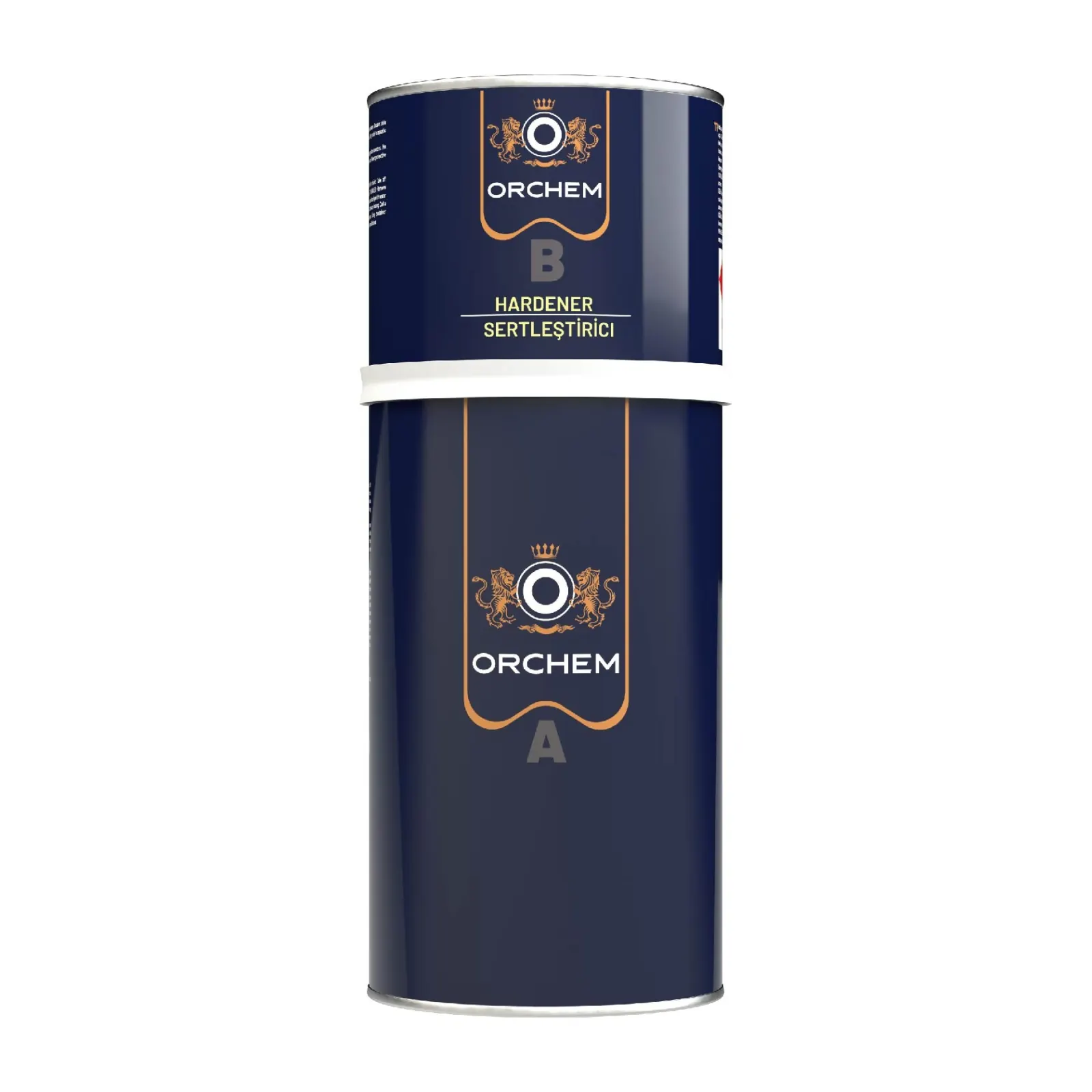
| Components | Two-component: A (varnish) + B (hardener) |
| Curing | Fully cures in 24–48 hours at 23 °C; no oven needed |
| Colour | Amber yellow |
| Mixing ratio | A : B = 3 : 1 (by weight) |
| Pot life | 2–4 hours (23 °C, after mixing) |
| Viscosity | 80–150 mPa·s (25 °C, mixed) |
| Solids | ~55 % (A+B mix) |
| Density | 0.95–1.05 g/cm³ (25 °C) |
| Dielectric strength | ≥ 12 kV/mm (IEC 60243) |
| Volume resistivity | ≥ 10¹² Ω·cm (IEC 60093) |
| Packaging | 1 / 4 / 20 kg sets |
| Shelf life | Part A 12 months, part B 6 months |
| Best for | Windings that need class H endurance without an oven |
Drying time, viscosity and pack sizes are given in the product TDS.
Air-drying varnishes
| Product | Base | Thermal class | Properties and use |
|---|---|---|---|
| OR-100 | Phenolic | B · 130 °C | Impregnation of electric motors in small-batch production |
| OR-102 | Phenolic | F · 155 °C | Fast-drying insulating varnish for rewind shops |
| OR-105 | High solids | F · 155 °C | Transformer insulating varnish; applied by spray gun or dipping, thinned with T-100 |
| OR-114 (2 BK 1024) | 2K polyurethane | H · 180 °C | Room-temperature curing motor insulating varnish; high chemical resistance, resistant to Freon and similar refrigerant gases |
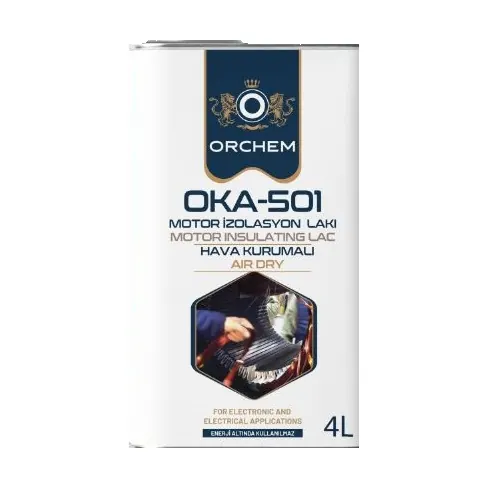
| OKA-501 | See TDS | F · 155 °C | Very fast-drying insulating varnish, ideal for rewind shops. Thinned with T-501, 4 L tin |
Download the detailed TDS (PDF)
Summary values are in the table above. For the detailed TDS with all test methods, application and storage information, leave your name and email; the PDF downloads right away.
OR-114 is a two-component polyurethane class H (180 °C) insulating varnish, also sold on the market as 2 BK 1024 (2BK1024). It needs no oven: once components A (varnish) and B (hardener) are mixed, it cures at room temperature. If you are looking for 2 BK 1024, Orhun Kimya makes it as OR-114.
Class H windings are usually processed with baking winding varnishes. If your shop has no oven, the part does not fit in one, or the job is done on site, OR-114 delivers the same thermal class with a system that cures at ambient temperature. The cured film has high chemical resistance and withstands refrigerant gases such as Freon.
Where is it used?
- Motor and generator windings running at high temperature,
- Large stators, rotors and coils that do not fit in an oven,
- On-site or in-plant repairs that require class H,
- Windings in contact with Freon and similar refrigerant gases,
- Rewind jobs where chemical resistance matters.
Properties
- Thermal class H (180 °C): in the IEC 60085 classification, H stands for 180 °C. As a higher-class varnish it can also be used on class F and B windings.
- No oven needed: fully cures in 24–48 hours at 23 °C.
- Mixing ratio: A : B = 3 : 1 by weight; pot life is 2–4 hours at 23 °C.
- Low viscosity: 80–150 mPa·s at 25 °C when mixed, so it penetrates between the wires well.
- Electrical values: dielectric strength ≥ 12 kV/mm, volume resistivity ≥ 10¹² Ω·cm.
- Colour and packaging: amber yellow; 1, 4 and 20 kg sets.
How is it applied?
- Clean and dry the winding; never varnish a damp winding. See the winding drying guide for details.
- Weigh A and B on a scale at 3 : 1 by weight (e.g. 3 kg A + 1 kg B).
- Mix thoroughly in a clean, dry container, scraping the bottom and sides.
- Mix only what you can use within the 2–4 hour pot life; discard mix that has gone past it.
- Apply to the clean, dry winding and let the excess drain.
- Leave the part to cure for 24–48 hours at around 23 °C in a dust-free area; do not load it before it is fully cured.
Without component B the varnish will not cure; never judge the ratio by eye. For the differences between dipping, pouring and brushing, see how to apply motor varnish.
How to choose and what to watch
If the winding is class H and you have an oven, baking varnishes are a good choice. Without an oven, for large parts, or when the winding will contact refrigerant gas, OR-114 is the better fit. For general work at class F and below, single-component air-drying winding varnishes or the very fast-drying OKA-501 motor insulating lacquer are more practical. For the difference between classes, see the class B, F and H guide.
Close the containers right after use. In unopened packaging, part A keeps for 12 months and part B for 6 months.
Common mistakes
- Judging the ratio by eye: too little or too much hardener spoils the cure and the film properties.
- Mixing a whole day's quantity at once: mix past its pot life cannot be used.
- Applying to a damp or oily winding: the varnish does not bond and insulation resistance comes out low.
- Running the motor before full cure.
- Adding thinner without checking the TDS: thinners for single-component varnishes may not suit a two-component system.
For the OR-114 technical data sheet (TDS), write to us via the form or WhatsApp.
Questions
Are 2 BK 1024 and OR-114 the same product?
Yes. The two-component polyurethane class H varnish sold as 2 BK 1024 (2BK1024) is made by Orhun Kimya under the name OR-114.
What is OR-114 used for?
OR-114 insulates and bonds motor and coil windings to class H (180 °C) without an oven. It cures at room temperature and resists refrigerant gases such as Freon.
Can OR-114 be used without the hardener?
No. OR-114 is two-component; it will not cure without component B (hardener).
What are the mixing ratio and pot life of OR-114?
A and B are mixed 3 : 1 by weight (e.g. 3 kg A + 1 kg B). The mix must be used within 2–4 hours at 23 °C.
How long does OR-114 take to dry?
It fully cures in 24–48 hours at 23 °C; no oven is needed. Cold conditions lengthen the time; do not load the motor before full cure.
What is OR-114 thinned with?
Whether thinning is needed and which thinner to use is stated in the product TDS; request it via the form or WhatsApp. Do not add thinners meant for single-component varnishes without checking the TDS.
Can it be used on a class F motor?
Yes. A higher-class varnish can be used on a lower-class winding without problems.