
How to make a resin cable joint? What is Protolin and how is it prepared?
What Protolin is, how a resin-filled cable joint is made step by step, how to prepare the mix and common mistakes.
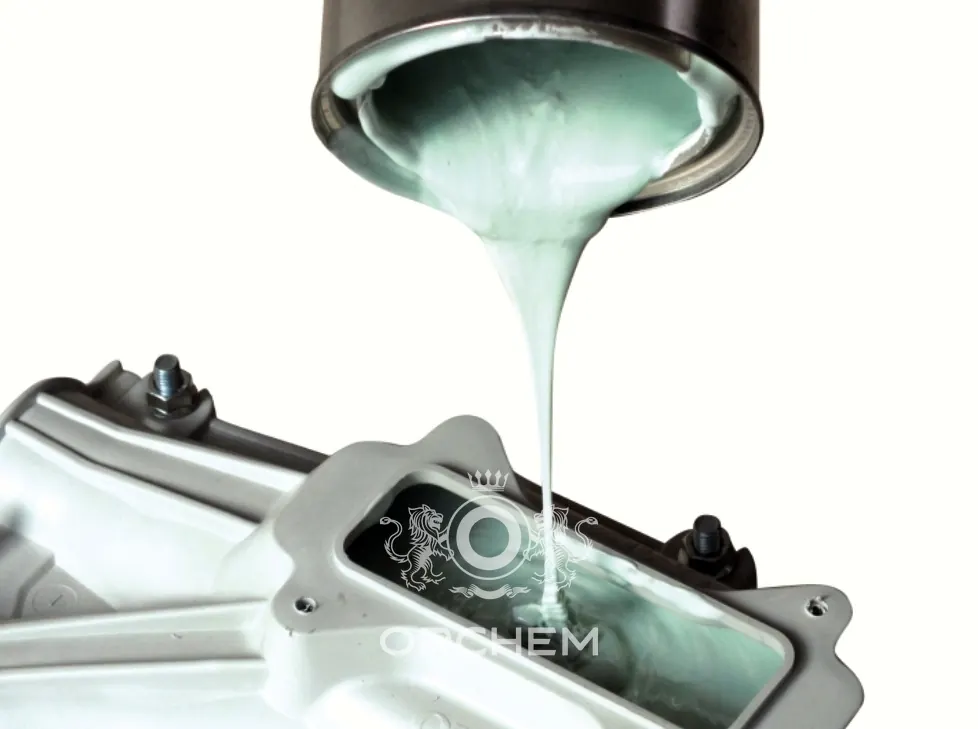
What is Protolin?
Protolin is the common trade name in Türkiye for the two-component (A+B) polyurethane casting resin used in cable joints. After the connection is made, it is poured as a liquid into the joint shell or mould, surrounds the joint on all sides and cures into a solid but flexible filling. It has three jobs: to seal the joint against water and moisture, to provide electrical insulation between the conductors and to the outside, and to protect the joint mechanically against impact, crushing and vibration.
On site, "protolin", "joint resin", "cable joint resin" and "potting resin for joints" often mean the same type of product. The cable joint resin (Protolin) Orchem makes for this job is a polyurethane mixed 1:1 by weight, with low viscosity, that stays elastic after curing.
What is a cable joint and what does a resin-filled joint do?
A cable joint is the protective body around the point where two cable ends are connected. The cable's insulation and outer sheath are opened at the joint, so this point has to be insulated and closed again. In a resin-filled joint, a casting resin that fills the joint mould does this job.
While liquid, the resin flows into the gaps between the conductors, the connector and the cores, leaving no room for air or moisture. Once cured, the joint becomes a single block bonded to the cable sheath. Compared with a joint closed only with tape or a cover, there are far fewer paths for water to creep in.
Where are resin cable joints used?
- Joints in buried power cables,
- Street, park and site lighting cable connections,
- Joints and extensions in pump and well cables,
- Damp places or places at risk of flooding, such as basements, ducts and shafts,
- Outdoor connection points,
- Potting cables and connection points in industrial plants.
The voltage level and the joint system depend on the cable type and the project. Always follow the instructions of the joint kit and the cable manufacturer.
How to make a resin cable joint, step by step
- Prepare the materials and the spot: Have the joint mould, connector, tape, abrasive paper, a cleaning cloth, the resin kit, a mixing cup and a stirrer at hand. Do not pour in the rain or in a pit with standing water unless it is covered.
- Strip the cable: Open the outer sheath with the joint length in mind and strip the core insulation to the length the connector requires. Do not nick the conductor or the sound insulation.
- Clean and abrade the surface: Remove oil, dust and mud from the part of the sheath the resin will touch, then roughen it with abrasive paper. The surface must be dry.
- Connect the conductors: Join the cores with a connector or terminal that suits the cross-section, crimping or tightening it as the connector instructions say. Arrange the cores so they stay apart and in the middle of the mould.
- Fit the mould: Close the joint mould or shell over the connection and seal its ends with tape. The pouring opening must face up.
- Mix A and B: The mixing ratio is on the product label and the TDS; for Orchem Protolin it is 1:1 by weight. Weigh the components and stir slowly, scraping the bottom and sides of the cup, until the mix looks uniform.
- Pour: Pour the mix slowly in a thin stream through one opening before the pot life runs out. Let the air escape, fill the mould to the top and close the opening.
- Wait for the cure: The resin keeps hardening after it gels. Orchem Protolin cures fully in 24 hours at 23 °C; in the cold this takes longer. Do not bury the joint or bend the cable before the cure is complete.
- Measure before energising: When curing is complete, check the insulation resistance with a suitable tester. If the value is low, do not energise the line; find the cause.
Possible causes of low insulation resistance are explained for windings in our guide why insulation resistance is low; the effect of moisture and dirt is similar in cable joints.
| Step | What to watch |
|---|---|
| Cable preparation | No nicks in the conductor or sound insulation |
| Cleaning and abrading | Oil-free, dry, roughened sheath surface |
| Conductor connection | Connector suited to the cross-section, fully crimped |
| Mould | Ends taped shut, pouring opening facing up |
| Mixing | Ratio on the label, scales, scrape bottom and sides |
| Pouring | Within pot life, slowly, through one opening |
| Curing | No load, voltage or burial before full cure |
How to prepare Protolin
Preparation comes down to the right ratio and a complete mix. The kit has two separate containers; once they are combined, a chemical reaction starts. So mix only when the mould is ready.
- Get the ratio by weight: The 1 kg kit of Orchem Protolin contains 500 g of A and 500 g of B; if you use the whole kit, simply mix both containers completely. If you split the kit, weigh it on scales.
- Stir slowly and patiently: Fast whisking whips air into the mix. Scrape the bottom and sides and stir until it looks the same everywhere.
- Do not let the mix stand: Orchem Protolin gels in 12–15 minutes at 23 °C. In hot weather this is shorter; mix only as much as you can pour in one go.
- In the cold: The resin thickens, and gelling and curing slow down. Bring the containers to room temperature in a warm room before use; never heat them with an open flame.
- In humidity: Polyurethane resin is sensitive to moisture. Open the containers just before use and close what is left tightly. Pouring onto a wet surface causes bubbles during curing.
For viscosity, gel time and other values, see the product TDS. You can request the TDS of Orchem Protolin on the cable joint resin product page.
Common mistakes
- Guessing the ratio: If the ratio is off, the resin may stay soft, tacky or brittle.
- Incomplete mixing: Unmixed resin at the cup wall leaves uncured zones inside the joint.
- Dirty or oily sheath: The resin does not bond to the sheath, and a path opens for water between the filling and the sheath.
- Hardener left open in humid air: The hardener reacts with moisture in the air; the mix cures foamy and weak. Do not use it if there is a skin or lumps in the container.
- Not filling the mould completely: An air pocket at the top is where moisture collects.
- Pouring too late: Resin that has started to gel no longer flows into narrow gaps.
- Loading or energising before full cure: A filling that is not fully cured does not give its full insulation and sealing; bending the cable or burying the joint damages it.
Polyurethane or epoxy for cable joints?
Both are two-component casting resins, but they behave differently once cured. Polyurethane joint resins usually stay flexible and absorb the cable's thermal expansion and small movements without cracking. That is why polyurethane is mostly chosen for cable joints. Epoxy casting resins usually give a harder, more rigid body and are preferred for static work such as potting coils, transformers and electronic parts.
The choice should follow the cable type, the environment and the joint system. We compare the two resin families on the polyurethane and epoxy resins page. For rigid potting see casting resins, and for potting electrical parts in polyurethane see OR-420 polyurethane casting resin. Short explanations of terms such as cure, gel time and dielectric strength are in our electrical insulation glossary.
Questions
What is Protolin used for?
It fills the inside of the joint mould in cable joints. It seals the joint against water and moisture and gives electrical insulation and mechanical protection. It is a two-component polyurethane filling that stays flexible after curing.
How long does Protolin take to set?
It depends on the product and the temperature; exact values are in the product TDS. Orchem Protolin gels in 12–15 minutes at 23 °C and cures fully in 24 hours. These times are longer in the cold and shorter in the heat.
Is Protolin waterproof?
Cured polyurethane filling resists water and moisture; Orchem Protolin is used in buried and outdoor joints. For this to hold in the field, the sheath must be clean and roughened and the mould completely filled.
Can a resin cable joint be reopened?
Cured resin is permanent; it does not return to its original state when heated or dissolved. In case of a fault the filling can be cut away to reach the connection, but it cannot be reused. Usually that section is prepared again and a new joint is made with fresh resin.
What is the difference between Protolin and epoxy?
Protolin is a polyurethane and stays flexible after curing, absorbing the cable's movement and thermal expansion without cracking. Epoxy casting resins are usually harder and more rigid and are preferred for potting static parts.
How is Protolin mixed?
Weigh the components at the ratio on the label; for Orchem Protolin it is 1:1 by weight. Stir slowly, scraping the bottom and sides of the cup, until the mix looks uniform, and pour without delay.
Can Protolin be used in cold weather?
Yes, but the resin thickens and gelling and curing take longer. Bring the containers to room temperature beforehand, keep the pouring spot dry and allow a longer cure. Do not heat with an open flame.
Can leftover resin be stored?
Mixed resin cannot be stored, so mix only what you will pour. Unopened containers keep for 12 months in a cool, dry place; close an opened container tightly right away.
Updated: