OR-420 Polyurethane Casting Resin
Non-flammable 2K polyurethane casting resin; cures at room temperature, keeps insulating in humid conditions.
Technical information
| Type | Two-component (2K) polyurethane casting resin: part A resin + part B hardener |
|---|---|
| Colour | A: black; B: transparent brown; mix: black |
| Mix ratio | A : B = 4 : 1 (by weight) |
| Pot life | 20 min (25 °C) |
| Gel time | 40–60 min (25 °C) |
| Initial cure | 24 h (25 °C) or 6 h (60 °C) |
| Full cure | 7 days (25 °C) |
| Hardness | 70–75 Shore D |
| Tensile strength | 4–6 MPa |
| Elongation at break | 15–20 % |
| Post-cure settling | < 0.01 % |
| Thermal conductivity | 0.55–0.65 W/(m·K) |
| Thermal shock test | −40 °C / +150 °C |
| Dielectric constant / dissipation factor | 3.29 (25 °C) / 0.061 (ASTM D-150) |
| Surface resistivity | 2 × 10¹³ Ω |
| Volume resistivity | 3 × 10¹³ Ω·cm (ASTM D-257) |
| Dielectric strength | 200–240 kV/cm (IEC 60243) |
| Fire behaviour and environment | Formulated to be non-flammable; RoHS compliant |
| Packaging | 1 kg, 4 kg, 20 kg |
| Shelf life | A: 24 months; B: 12 months (10–30 °C, cool, dry, closed; away from sunlight and excessive heat) |
Drying time, viscosity and pack sizes are given in the product TDS.
Download the detailed TDS (PDF)
Summary values are in the table above. For the detailed TDS with all test methods, application and storage information, leave your name and email; the PDF downloads right away.
OR-420 is a two-component (part A resin + part B hardener) polyurethane casting resin developed for casting parts that need electrical insulation. It is formulated to be non-flammable, cures at room temperature and provides high electrical insulation in humid conditions. Its exotherm during cure is low, and shrinkage and settling are minimal. The mix is black.
Where is it used?
- Casting applications that require electrical insulation,
- Casting electrical parts that operate in humid environments,
- Casting jobs where low shrinkage and settling are required,
- Potting wound parts such as transformers and coils.
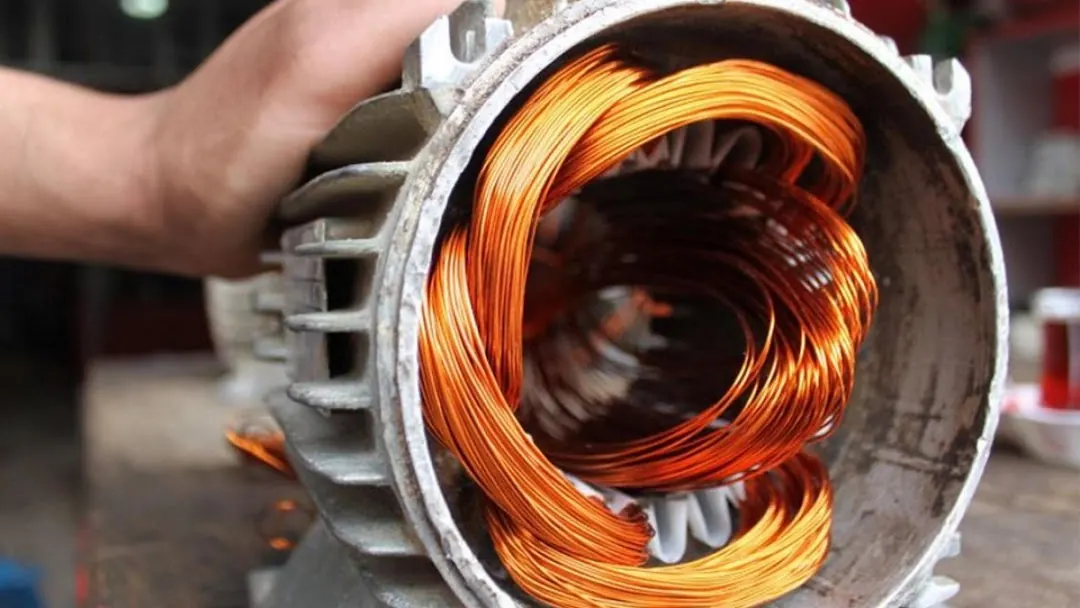
The photo on this page shows a water-cooled welding machine transformer filled with OR-420. In this type of transformer the winding may run in conditions exposed to moisture and condensation; the cured casting fixes the winding in place and seals it off from the surroundings.
Properties
- Electrical insulation: dielectric strength 200–240 kV/cm (IEC 60243), volume resistivity 3 × 10¹³ Ω·cm (ASTM D-257), surface resistivity 2 × 10¹³ Ω, dielectric constant 3.29 (25 °C, ASTM D-150).
- Mechanical: reaches 70–75 Shore D; elongation at break 15–20 %, tensile strength 4–6 MPa. Abrasion resistant.
- Dimensional stability: low shrinkage; post-cure settling below 0.01 %.
- Thermal behaviour: low exotherm during cure; thermal conductivity 0.55–0.65 W/(m·K); thermal shock test range −40 / +150 °C.
- Fire and environment: formulated to be non-flammable; RoHS compliant.
How to apply
- Clean the part and surface of oil, dirt, dust, water and foreign matter. If the winding has absorbed moisture, dry it first; see our winding drying guide.
- If the ambient temperature is below 10 °C, warm part A to 25–30 °C.
- Stir part A on its own until homogeneous.
- Weigh A and B at 4:1 by weight on a scale (for example 4 kg A + 1 kg B) and mix without trapping air. Mixing can be done by hand, with a mixer or under vacuum.
- Pour slowly within the pot life of 20 minutes at 25 °C. Gelling starts after 40–60 minutes.
- Initial cure takes 24 hours at 25 °C or 6 hours at 60 °C; full cure takes 7 days at 25 °C. Do not load the part before it is fully cured.
Epoxy casting or polyurethane OR-420?
Epoxy casting resins generally form a harder, more rigid mass; polyurethanes are more flexible and tolerate impact and thermal shock better. Despite its 70–75 Shore D hardness, OR-420 shows 15–20 % elongation at break; this flexibility helps reduce the stress that builds up as the winding and housing heat and cool.
Curing options and operating conditions decide the choice. EPC-620 is a halogen-free, flame-retardant, mineral-filled epoxy that cures at room temperature and is suitable for continuous operation up to 150 °C. EPC-640 is an oven-cured, filled transformer casting resin that reaches over 85 Shore D. OR-420 stands out for parts that work in humid conditions, face impact and thermal cycling, and need low settling. For jobs with high continuous operating temperatures, consult us about your application.
Common mistakes
- Moist part B or an open container: the isocyanate in the hardener is sensitive to moisture; part B that has picked up moisture causes bubbles and foaming. Close the lid right after use.
- Guessing the ratio: the 4:1 ratio is by weight; a mix prepared by eye or by volume will not cure properly.
- Mixing cold without warming: below 10 °C, unwarmed part A is hard to blend evenly and voids can remain in the casting.
- Exceeding the pot life: after 20 minutes the thickening mix no longer fills gaps well; prepare only as much as you need each time.
Storage and safety
Part A keeps for 24 months and part B for 12 months at 10–30 °C in a cool, dry place, in closed packaging, away from sunlight and excessive heat. Pack sizes are 1 kg, 4 kg and 20 kg. Wear gloves and safety goggles and ensure good ventilation.
For other systems see casting resins, polyurethane and epoxy resins and polyurethane resin. You can request the detailed TDS (PDF) using the form on this page.
Questions
What is OR-420 used for?
OR-420 is used for casting parts that need electrical insulation, especially parts that work in humid conditions. Once cured it encapsulates and fixes the part and provides high electrical insulation in humid environments.
What is the mix ratio of OR-420?
A:B = 4:1 by weight; for example, add 1 kg of part B to 4 kg of part A. Do not guess or measure by volume; weigh on a scale.
How long does OR-420 take to cure, and does it need an oven?
No oven is needed; OR-420 cures at room temperature. Initial cure is 24 hours at 25 °C, or 6 hours at 60 °C if preferred. Full cure is 7 days at 25 °C.
What is the pot life?
20 minutes at 25 °C; gelling starts after 40–60 minutes. Pour within this time and mix only as much as you need.
How do I apply OR-420 in cold weather?
If the ambient temperature is below 10 °C, warm part A to 25–30 °C, stir it on its own, then mix it with part B at 4:1.
What is the difference between OR-420 and an epoxy casting resin?
OR-420 is a polyurethane; compared with epoxy it is generally more flexible and more tolerant of impact and thermal shock (elongation at break 15–20 %). For a room-temperature-curing, halogen-free flame-retardant epoxy choose EPC-620; for oven-cured filled transformer casting choose EPC-640.
How should OR-420 be stored, and what is its shelf life?
Part A keeps for 24 months and part B for 12 months at 10–30 °C in a cool, dry place, in closed packaging. Part B is sensitive to moisture; do not leave the container open.