Variac Varnish (Variable Autotransformer Varnish)
Colourless, sediment-free insulating varnish for variac surfaces; 120–200 °C, no skin in the tank.
Technical information
| Use | Outer winding surface of variacs (variable autotransformers) |
|---|---|
| Heat resistance | 120–200 °C |
| Colour | Colourless, clear, sediment-free |
| Film | Hard; glossy or matt surface, high electrical insulation |
| Application | Spray gun, dipping, brush |
| Dipping | Does not skin over in the tank |
| Drying time and thinner | In the product TDS |
| Storage | At least 1 year in a dry, cool place |
Drying time, viscosity and pack sizes are given in the product TDS.
What is variac varnish?
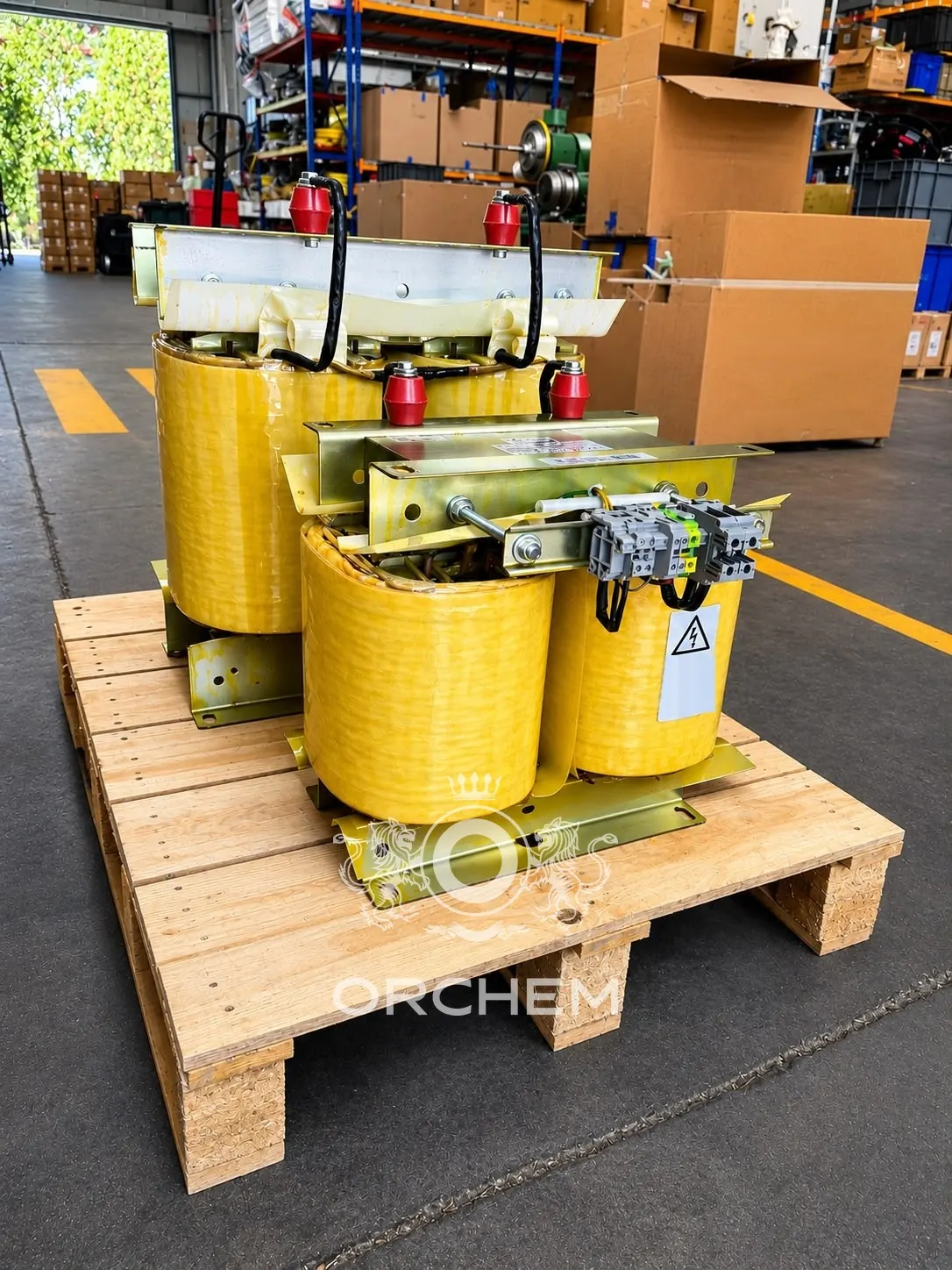
Variac varnish is a colourless, clear, sediment-free insulating varnish that forms a hard, heat-resistant, electrically insulating film on the outer winding surface of variacs (variable autotransformers). Orhun Kimya makes it with a heat resistance of 120–200 °C; it is applied by spray gun, dipping or brush.
A variac is a variable transformer that delivers an adjustable AC voltage from a fixed AC mains supply. It usually consists of a single-layer winding on a toroidal core and a carbon brush that travels over that winding. The outer face of the winding must be protected both mechanically and electrically; variac varnish is the final layer of that protection. Variacs are also called adjustable transformers or variable autotransformers.
Where is it used?
- Manufacturing adjustable voltage sources (variacs) for laboratory, test and training setups,
- Repairing rewound variacs or those with a worn surface,
- Top-coating a winding surface levelled with variac putty,
- The outer surface of adjustable transformer and voltage regulator windings.
Properties
- Heat resistance: 120–200 °C.
- Appearance: colourless, clear and sediment-free; does not hide the winding.
- Film: hard, glossy or matt surface; high electrical insulation.
- Application: spray gun, dipping and brush.
- Suited to dipping: does not skin over in the tank, so it is easy to use in a dip bath.
- Storage: at least one year in a dry, cool place.
Drying time, solids, viscosity and thinning information are given in the product's technical data sheet (TDS).
How is it applied?
- Clean the winding surface: remove dust, oil, old varnish and loose putty residue.
- Dry the winding; do not varnish a damp winding. See our winding drying guide.
- Mask the track where the carbon brush makes contact with tape or a suitable mask; no varnish should reach this area.
- If the surface has gaps, fill them first with variac putty and let it dry.
- Apply the varnish by spray gun, dipping or brush in a thin, even coat; let the excess drain after dipping.
- Leave it to dry under the conditions given in the TDS; then remove the mask and check that the brush track is clean.
For the differences between dipping, spraying and brushing, see our guide on how to apply varnish.
How to choose and what to watch
Variac varnish is a surface varnish; its job is to keep the outer face hard, clean and insulating. If you need an impregnation that penetrates deep into the winding, choose from our transformer varnishes, for example the air-drying transformer varnish OR-105. If a coloured, opaque top coat is wanted, insulating top-coat lacquers and paints are a better fit.
For shops that both build and repair variacs, the fact that the varnish does not skin over in the tank is a real convenience: there is less skin to clear from the dip bath and parts are dipped into varnish of the same consistency each time. Keep the tank covered when not in use.
Compare your variac's operating temperature with the varnish's 120–200 °C range. If thinning is needed, use only the thinner stated in the TDS; for general information see our thinner types page.
Common mistakes
- Not masking the brush track: the varnish insulates the carbon contact surface and the variac does not work properly.
- Applying to a damp or oily surface: the varnish does not adhere and insulation resistance comes out low.
- One thick coat: the film dries slowly and runs and drips form.
- Thinning with an unsuitable thinner: the varnish may turn cloudy or dry poorly.
- Putting it into service before it is fully dry: the soft film can be damaged by heat and brush movement.
For the variac varnish TDS, tell us your variac's operating conditions via the form or WhatsApp.
Questions
What is variac varnish used for?
Variac varnish forms a hard, heat-resistant, insulating film on the outer winding surface of a variac. It protects the winding against mechanical wear, dust and moisture.
What temperature does variac varnish withstand?
It is resistant across 120–200 °C. Compare your variac's operating temperature with this range.
How is variac varnish applied?
By spray gun, dipping or brush. Before application the winding is cleaned and dried, and the carbon brush contact track is masked.
How long does variac varnish take to dry?
The drying time is stated in the product TDS; request it via the form or WhatsApp. A thin, even coat dries more reliably than one thick coat.
What is variac varnish thinned with?
Whether thinning is needed and which thinner to use is stated in the product TDS. Do not add another varnish's thinner without checking the TDS.
Is variac varnish coloured?
No. It is colourless, clear and sediment-free, leaving a hard, glossy or matt film. If a coloured top coat is wanted, insulating top-coat lacquers and paints can be used.
Is it used together with variac putty?
Yes. Gaps in the winding surface are first filled with variac putty; once the putty is dry, variac varnish is applied as the top coat.