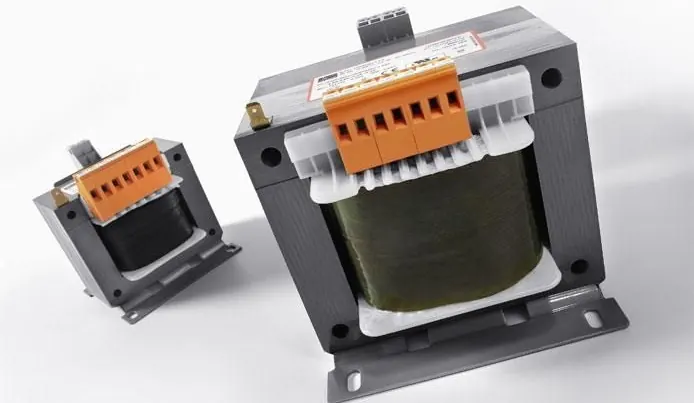
Baking (Oven-Cured) Transformer Insulating Varnish OR-305
Class H (180 °C) oven-cured transformer varnish; applied by dipping, VPI or spray gun.
Technical information
| Product code | OR-305 |
|---|---|
| Drying | Baking (heat-cured in an oven) |
| Thermal class | H (180 °C) |
| Application | Dipping, VPI, spray gun |
| Thinner | T-300; generally 2–8% by volume |
| Tank viscosity | General target 60 s (DIN Cup 4) |
| Colour | Yellowish clear (standard) |
| Base | See product TDS |
| Baking temperature and time | See product TDS |
| Best for | Dry-type and LV/MV transformers, reactors, chokes, series production |
Drying time, viscosity and pack sizes are given in the product TDS.
Baking varnishes
| Product | Base | Thermal class | Properties and use |
|---|---|---|---|
| OR-300 | One-component, solvent-based | H · 180 °C | Oven-cured motor and transformer insulating varnish; applied by dipping or VPI |
| OR-305 | See TDS | H · 180 °C | Baking transformer insulating varnish; applied by dipping, VPI or spray gun |
| OR-306 | Water-based | See TDS | Water-based baking insulating varnish |
| OR-307 | See TDS | See TDS | LF: low-VOC baking insulating varnish |
| OR-3200 | See TDS | See TDS | Varnish for glass-fibre insulated wire production |
| OR-4200 | See TDS | See TDS | Can/coil: varnish and paint for tinplate and sheet coating |
What is baking transformer varnish?
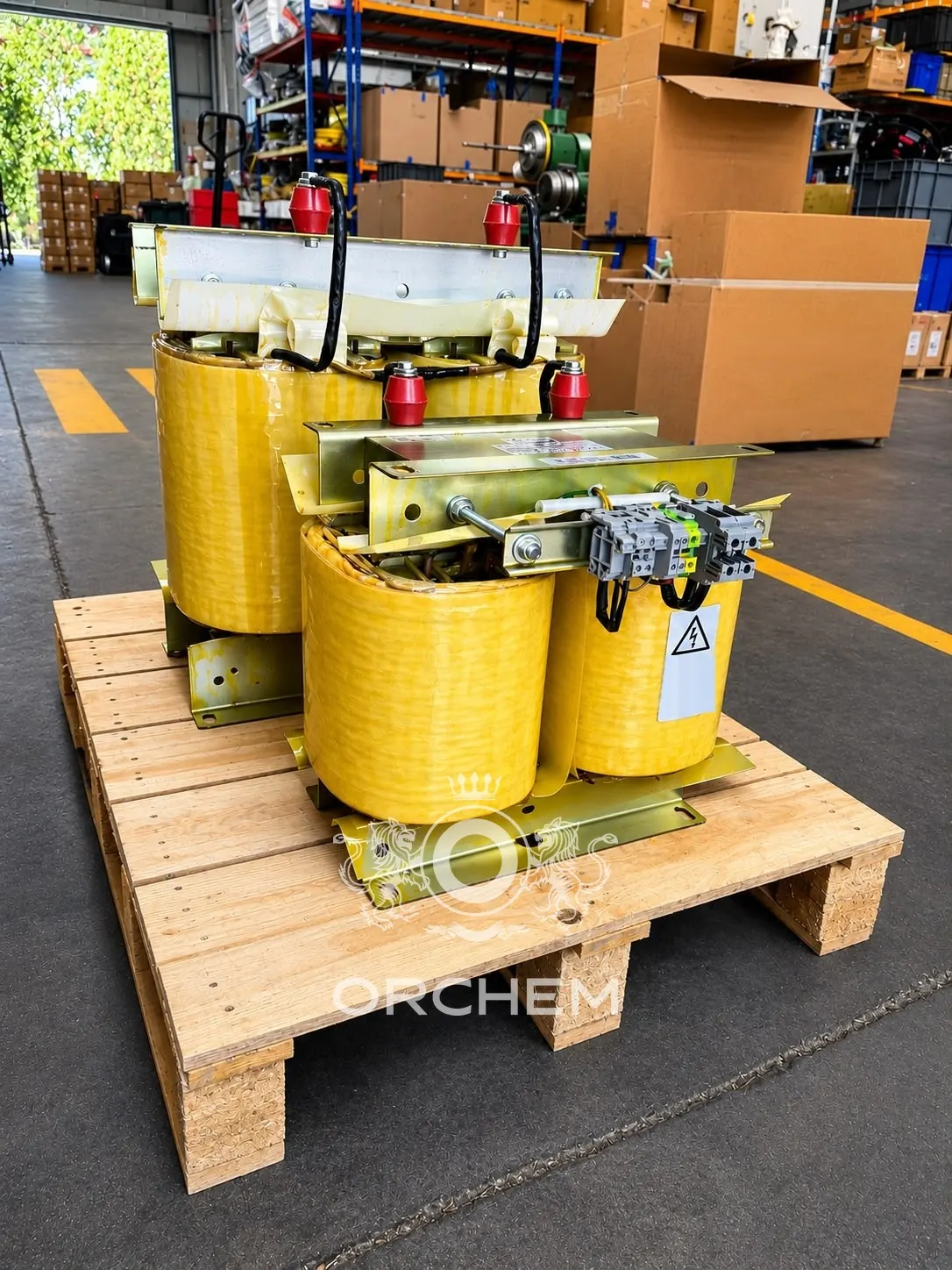
Baking transformer varnish is an electrical insulating varnish that is cured by heat in an oven after it is applied to a transformer winding. Orhun Kimya's product in this group, OR-305, is a class H (180 °C) oven-cured transformer insulating varnish applied by dipping, VPI (vacuum pressure impregnation) or spray gun. After baking it leaves a hard film that turns the winding into a single solid body and resists chemicals and field conditions.
With air-drying varnishes, drying depends on solvent evaporation and ambient conditions. A baking varnish is cured by heat, so the film is harder and gives the winding a higher bond strength. OR-305 is a yellowish clear varnish as standard. Polyester, epoxy or polyurethane based baking varnishes can also be made on request.
Where is it used?
- Dry-type transformers and windings running at high temperature,
- Series production of low and medium voltage transformers,
- Shunt reactors, chokes and voltage regulator transformers,
- Transformers working outdoors or with large hot–cold cycles,
- Large windings impregnated on a VPI line.
Properties
- Class H heat resistance: 180 °C (IEC 60085 classification); also usable on class F and B windings.
- Hard yet flexible film: forms a hard structure that stays flexible for a long time and resists cracking.
- Strong adhesion: adheres well to wires and surfaces and holds the winding together against mechanical forces and vibration.
- Chemical resistance: the baked film withstands chemicals and field conditions and does not wear quickly.
- Three application methods: dipping, VPI and spray gun.
How is it applied?
- Clean the winding and preheat it in the oven to drive out moisture; a warm winding draws in varnish better. See drying the winding before varnishing.
- Adjust tank viscosity with T-300 thinner. For baking varnishes thinner is generally added at 2–8% by volume, aiming for a tank viscosity of about 60 s (DIN Cup 4). The exact value is in the product TDS.
- When dipping, keep the winding in the varnish until bubbles stop. In VPI apply vacuum first, then pressure; details in what is VPI. With a spray gun, work the varnish well between the turns.
- Let the excess drain; do not put the winding in the oven while it is still dripping.
- Follow the temperature–time schedule in the TDS in full. Even if the surface looks dry, a winding baked too briefly may be uncured inside.
- Measure insulation resistance once the winding has cooled; apply an insulating topcoat if needed.
How to choose and what to watch
The varnish class must be at least the class of the winding. OR-305 suits dry-type and heavy-duty transformers that need class H. If you have no oven or the part does not fit, the class F air-drying transformer varnish OR-105 can be used. In medium voltage and large windings the varnish must reach the innermost layers; VPI gives the deepest penetration for this work.
In oil-filled transformers the winding works in hot oil; tell us the transformer type and operating temperature and we will confirm suitability with the TDS. If you need a special polyester, epoxy or polyurethane baking varnish, or a particular colour, density or film thickness, write to us.
Common mistakes
- Shortening the bake or working without measuring oven temperature.
- Not checking the dip tank for long periods; as solvent evaporates the varnish thickens and no longer penetrates.
- Using a thinner other than T-300. See the thinner ratio guide.
- Varnishing a damp winding without preheating.
For all transformer products see the transformer varnish page; for motor windings see baking winding varnish.
Questions
What does baking transformer varnish do?
It turns the winding into one solid body with a film that hardens in the oven: it bonds the wires, protects against moisture and dust, reduces vibration and hum, and raises resistance to heat and chemicals.
What thermal class is OR-305?
OR-305 is class H (180 °C). It can be used on class H, F and B windings.
Can OR-305 be applied by VPI?
Yes. OR-305 is applied by VPI (vacuum pressure impregnation), dipping or spray gun. On large and medium voltage windings VPI gives the deepest penetration.
What is OR-305 thinned with?
With T-300 thinner. For baking varnishes thinner is generally added at 2–8% by volume, keeping tank viscosity around 60 s (DIN Cup 4); the exact value is in the TDS.
At what temperature and for how long is OR-305 baked?
The baking temperature and time are given in the product TDS; request it via the form or WhatsApp. Do not shorten the bake; a winding baked too briefly may stay uncured inside.
Should I choose air-drying or baking transformer varnish?
Choose baking OR-305 if you have an oven, run series production or need class H. Without an oven, or for repair work, use the class F air-drying OR-105.
Do you make baking varnish in other colours or bases?
Yes. The standard colour is yellowish clear; polyester, epoxy or polyurethane based baking varnishes in other colours can be made on request.