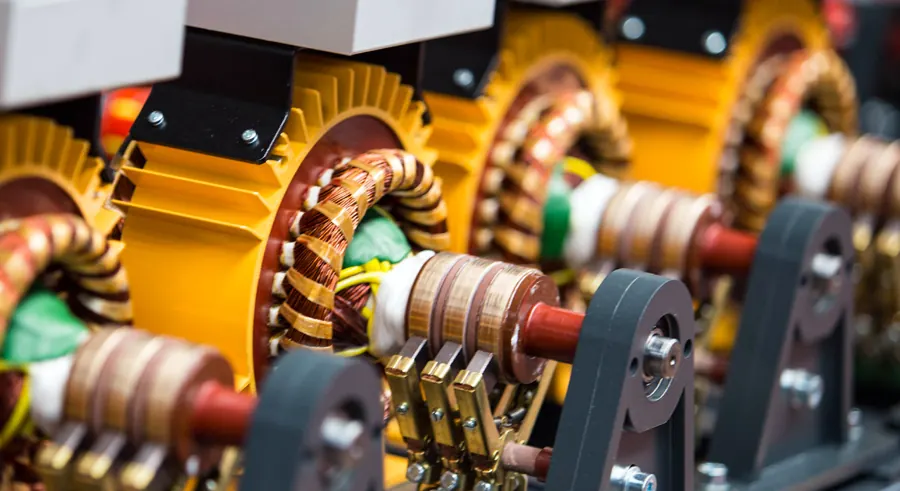
Armature Varnish for Rotors and High-Speed Motors
Low-viscosity varnish for armature and rotor windings; holds wires in place at high speed.
Technical information
| Use | Armature and rotor windings |
|---|---|
| Consistency | Thin, penetrates deep into the winding |
| Suitable motors | High-speed motors, universal motors, submersible pumps |
| Benefit | Stops wires lifting, delays carbonisation |
| Application | Dipping or working between the wires |
| Thermal class | In the product TDS |
| Drying | In the product TDS |
| Thinner | In the product TDS |
Drying time, viscosity and pack sizes are given in the product TDS.
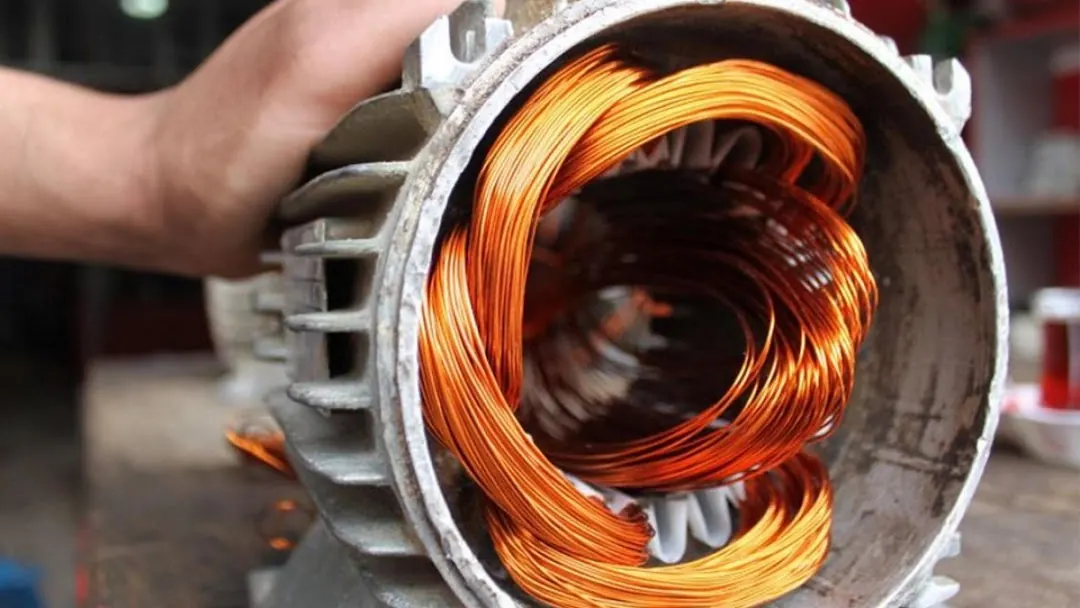
Armature varnish is an electrical insulating varnish for rotating armature and rotor windings; its thin consistency lets it reach between the wires and bond them together. Its job is to stop centrifugal force from moving the wires or throwing them out of the slots at high speed, and to delay carbonisation caused by friction and heat.
Why a separate varnish for armatures?
A stator winding stays still; an armature turns at thousands of revolutions per minute. In a rotating winding every wire is pushed outwards. If gaps remain between the wires, this movement wears the enamel over time, the winding heats up and the risk of a short circuit grows. Armature varnish flows into the inner layers of the winding and fixes the wires as one body. That is also why it must leave a thin, even film that does not upset the balance of the armature.
Where is it used?
- Power tool and universal motor armatures,
- Rotors of high-speed motors,
- Submersible pump motors,
- Small and medium motors whose windings face vibration and centrifugal force.
Properties
- Thin consistency; penetrates deep into the inner layers.
- Bonds the wires and stops them lifting at high speed.
- Delays carbonisation from friction and heat.
- Easy and practical to apply.
- Thermal class, drying conditions and thinner are given in the product TDS.
How is it applied?
- Clean the armature of dust, carbon dust and oil.
- Dry old or damp parts by heating them first. See the winding drying guide.
- Protect the commutator surface and bearing seats; keep varnish off them.
- Apply the varnish by dipping or by working it between the wires. For methods, see how to apply motor varnish.
- Drain the excess thoroughly; varnish collecting on one side upsets the balance. Turning the armature while it drains reduces build-up.
- Dry as stated in the TDS. Afterwards, check the balance if needed and measure insulation resistance.
How to choose and what to watch
Choose armature varnish for rotating windings such as armatures and rotors. For the stator of the same motor, a repair shop can use the air-drying OR 1xx, while series production or a shop with an oven can use the baking OR 3xx. In damp duty such as submersible pumps, a baking varnish gives the stator winding higher durability. The varnish selection guide shows which varnish suits which job.
For small touch-ups and maintenance on site, motor insulation spray is a practical option; it does not replace full impregnation.
Checks after varnishing
Before refitting the dried armature, make a few simple checks: no tacky areas on the winding, clean commutator segments, no wires standing proud at the slot openings. Measure insulation resistance with a megger and record the value so you can compare at the next service. For high-speed armatures, a short trial run at low speed reveals vibration or rubbing early.
Common mistakes
- Not draining the excess: Varnish on one side upsets the balance and causes vibration.
- Varnish on the commutator: It spoils brush contact, causing sparking and heating.
- Applying to a damp winding: Trapped moisture lowers insulation resistance. See why insulation resistance is low.
- Running before fully dry: At high speed soft varnish is flung off and the wires loosen again.
Thermal class, drying time and thinning details are in the product TDS; request it via the form or WhatsApp.
Questions
What does armature varnish do?
It bonds the wires of armature and rotor windings, stops centrifugal force from moving them or throwing them out of the slots at high speed, and delays carbonisation.
How does armature varnish differ from ordinary winding varnish?
It has a thinner consistency and is made to penetrate deep into a rotating winding. Its aim is to keep the wires from moving at high speed.
Can it be used in submersible pump motors?
Yes. Armature varnish suits submersible pumps and high-speed motors. For the stator winding, the OR 3xx baking varnish can also be considered.
How many hours does armature varnish take to dry?
Drying time and conditions are in the product TDS; request it via the form or WhatsApp. Do not run the armature at high speed before it is fully dry.
Is balancing needed after varnishing?
Not always, if the excess is drained well; but if build-up remains on one side, or for a high-speed armature, a balance check after drying is recommended.
What happens if varnish gets on the commutator?
Brush contact suffers and sparking and heating increase. Protect the commutator before applying and clean off any varnish before it dries.