

Epoxy Floor Coating
EP-PRIMER + EP-TOPCOAT 2K epoxy system: seamless, chemical- and abrasion-resistant, easy-to-clean concrete coating.
Technical information
| System | EP-PRIMER (primer) + EP-TOPCOAT (top coat) |
|---|---|
| Chemistry | 2K epoxy resin (A) / aliphatic polyamide hardener (B) |
| Colour EP-PRIMER | Clear |
| Colour EP-TOPCOAT | Grey (standard); custom colours available |
| Mixing ratio EP-PRIMER (A:B) | 2:1 (by weight) |
| Mixing ratio EP-TOPCOAT (A:B) | 4:1 (by weight) |
| Consumption EP-PRIMER | 750 g/m² (one coat) |
| Consumption EP-TOPCOAT | 900 g/m² (one coat) |
| Pot life EP-PRIMER (25 °C) | 45–60 min |
| Pot life EP-TOPCOAT (25 °C) | 40–50 min |
| Surface dry EP-PRIMER | 4–6 hours (25 °C, 60% RH) |
| Surface dry EP-TOPCOAT | 6–8 hours |
| Full cure (EP-PRIMER and EP-TOPCOAT) | 7 days (25 °C, 60% RH); full mechanical and chemical load after this |
| Application conditions | 15–30 °C, relative humidity 40–80% |
| Surface preparation | Sound, clean, dry, dust- and oil-free concrete; shot blasting or diamond grinding |
| Shelf life | Resin and hardener 12 months (10–25 °C, closed original packaging) |
Drying time, viscosity and pack sizes are given in the product TDS.
Download the detailed TDS (PDF)
Summary values are in the table above. For the detailed TDS with all test methods, application and storage information, leave your name and email; the PDF downloads right away.
What is epoxy floor coating?
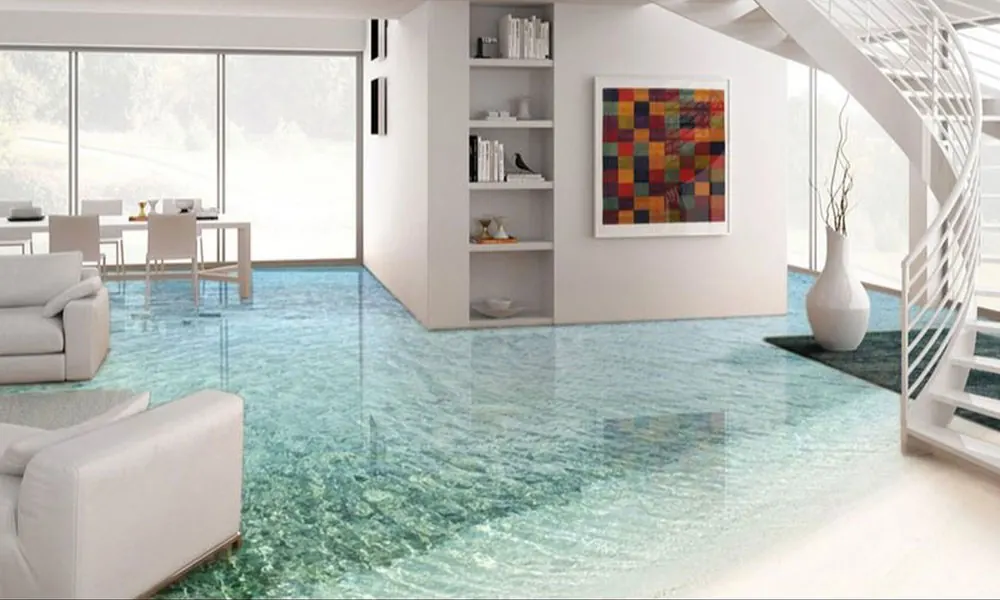
Epoxy floor coating is a hard, seamless, chemical-resistant floor finish made by mixing epoxy resin with a hardener and applying it over concrete. The Orchem epoxy floor system from Orhun Kimya consists of two products: EP-PRIMER, which seals the concrete, and EP-TOPCOAT, the finishing coat applied on top. Both are two-component (2K) products based on epoxy resin and an aliphatic polyamide hardener; once cured they give a smooth, non-porous and hygienic surface. The system suits old and new concrete floors; the standard colour is grey and custom colours are available.
The coating does not replace the concrete; it protects it against dusting, wear, liquid absorption and staining. It is strong enough for industrial traffic on nylon and rubber wheels.
Where is it used?
- Factories, workshops and production areas,
- Warehouses and logistics centres,
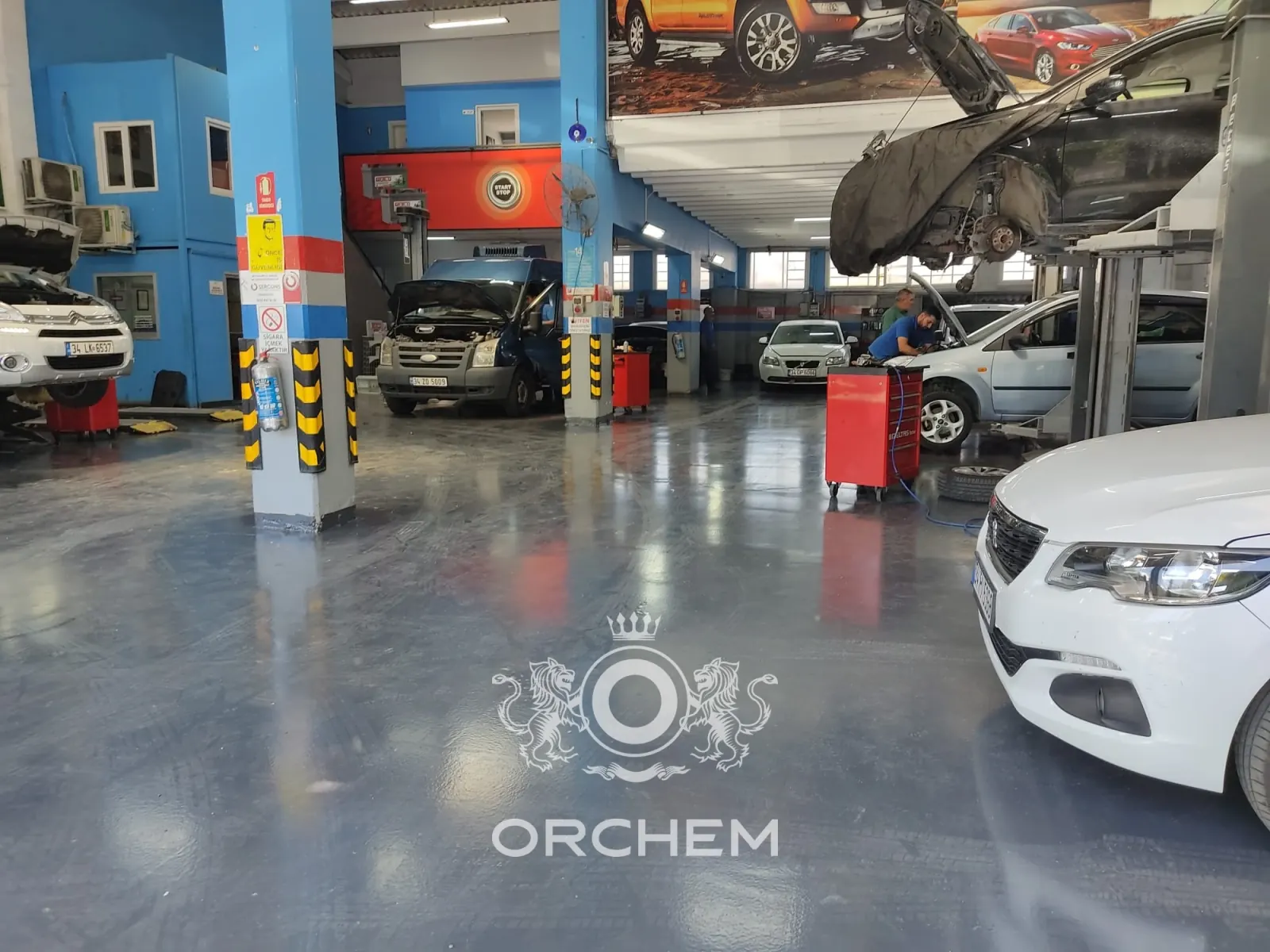
- Car parks, vehicle service areas and garages,
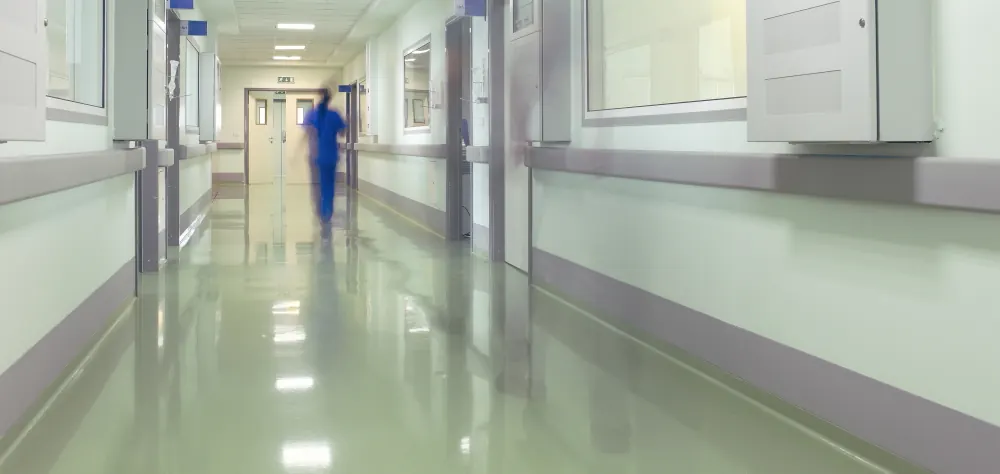
- Hospitals, laboratories and hygiene-critical areas,
- Dry production zones in food and pharmaceutical plants,
- Offices, showrooms and sports areas.
For heavy traffic and different service conditions, system selection is covered more broadly on the industrial floor coating page.
Orchem epoxy floor system: EP-PRIMER + EP-TOPCOAT
EP-PRIMER (primer)
EP-PRIMER is a low-viscosity, clear 2K epoxy floor primer. It penetrates cracked and porous concrete, seals the surface and gives the top coat a sound base to bond to. Mixing ratio A:B = 2:1 by weight; consumption 750 g/m² per coat. Pot life at 25 °C is 45–60 minutes and surface dry is 4–6 hours (25 °C, 60% RH).
EP-TOPCOAT (top coat)
EP-TOPCOAT is the 2K epoxy finishing coat that gives the floor its colour and resistance. Standard colour is grey; custom colours are available. Mixing ratio A:B = 4:1 by weight; consumption 900 g/m² per coat. Pot life at 25 °C is 40–50 minutes and surface dry is 6–8 hours. Both products reach full cure in 7 days at 25 °C and 60% RH; full mechanical and chemical loading is only allowed after that.
Apply at 15–30 °C and 40–80% relative humidity. The products are supplied as components A and B; resin and hardener have a shelf life of 12 months in the closed original packaging, stored cool and dry at 10–25 °C.
Properties
- Two-component epoxy resin / aliphatic polyamide hardener system,
- Seamless, monolithic, easy-to-clean surface,
- High resistance to chemicals, oils and abrasion,
- Moisture-resistant, stain-resistant surface,
- Strong adhesion thanks to a primer that penetrates cracked and porous concrete,
- Standard grey; custom colours on request.
The non-porous surface makes it hard for dirt, dust and micro-organisms to settle, which is why epoxy is often chosen where cleanliness matters. For an anti-slip finish, suitable aggregate is broadcast into the top coat.
How is it applied?
- Check the substrate: concrete must be sound, clean, dry, dust-free, oil-free and at least 28 days old. Rising damp must be dealt with first.
- Surface preparation: laitance, oil, old paint and loose layers are removed by shot blasting or diamond grinding; dust is vacuumed off.
- Primer (EP-PRIMER): weigh components A and B at 2:1 by weight, mix with a low-speed mixer and spread evenly at about 750 g/m² within the 45–60 minute pot life. The primer penetrates the pores of the concrete and seals the surface.
- Repairs: cracks and holes are filled with epoxy repair mortar.
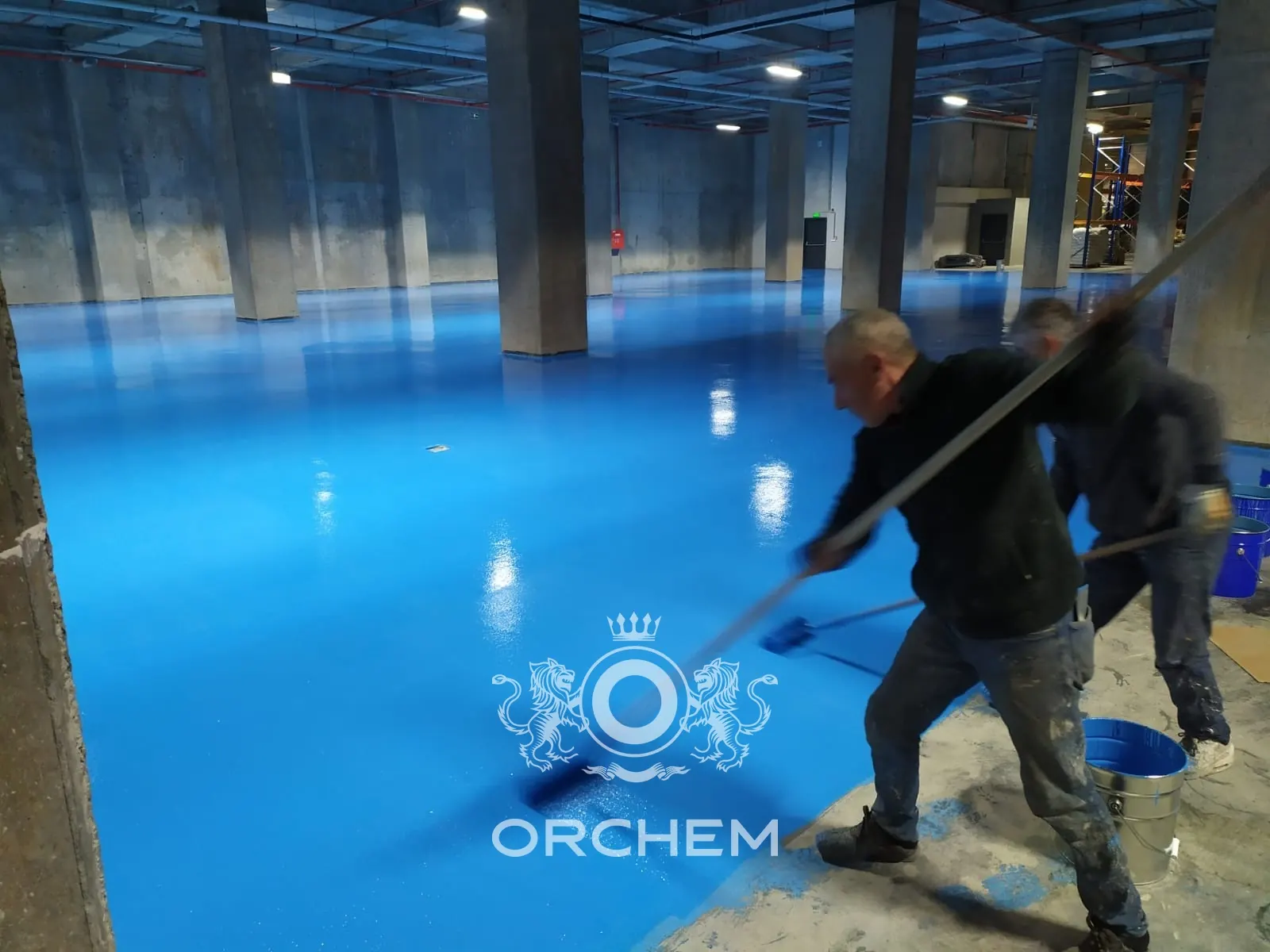
- Top coat (EP-TOPCOAT): apply once the primer is surface dry (4–6 hours at 25 °C). Weigh A and B at 4:1 by weight and mix; within the 40–50 minute pot life, spread at about 900 g/m² with a roller or squeegee, without leaving puddles and keeping a wet edge.
- Curing: the top coat is surface dry in 6–8 hours; allow 7 days at 25 °C and 60% RH before full mechanical and chemical loading. Lower temperatures lengthen these times.
Keep the area at 15–30 °C and 40–80% relative humidity throughout. Wear gloves and safety glasses and ventilate the area well.
How to choose and what to watch
First define the traffic type (foot, pallet truck, forklift, vehicles), chemical exposure, temperature and moisture. In areas exposed to sunlight or with high impact and temperature changes, polyurethane floor coating may suit better. Electronics production and explosion-risk areas need antistatic floor coating. Terraces and roofs call for waterproofing systems. For the chemistry of epoxy see epoxy resin, and for walls and metal surfaces see epoxy paints and varnishes.
Common mistakes
- Applying onto damp or freshly poured concrete, which leads to blistering and delamination.
- Coating over laitance without grinding.
- Mixing components by eye: if EP-PRIMER is not weighed at 2:1 and EP-TOPCOAT at 4:1 by weight, the surface stays tacky or soft.
- Applying below 15 °C, above 30 °C, above 80% relative humidity or when condensation is likely.
- Applying the top coat before the primer is surface dry, or leaving puddles in the top coat.
- Leaving mixed material in the bucket; exothermic heat shortens the pot life.
Care and cleaning
Clean an epoxy floor with neutral detergent and water, using a scrubber-dryer or mop. Abrasive powders and hard wire brushes reduce gloss. Wipe up spilled chemicals promptly; if the surface dulls over time in heavy-traffic zones, a new top coat can be applied after suitable preparation.
Ask about the right system for your floor via WhatsApp, and request the detailed TDS (PDF) for EP-PRIMER and EP-TOPCOAT using the form on this page.
Questions
What does epoxy floor coating do?
It protects concrete against dusting, wear, chemicals and liquid absorption, and creates a seamless, easy-to-clean, hygienic surface.
Which floors can epoxy coating be applied to?
Sound, dry old or new concrete at least 28 days old. The surface must be ground, dust-free and primed.
How soon can an epoxy floor be used?
The EP-TOPCOAT top coat is surface dry in 6–8 hours at 25 °C and 60% RH, but full mechanical and chemical loading should only be applied after 7 days. Add the 4–6 hour surface-dry time of the EP-PRIMER primer to this schedule. All times are longer in cold, humid conditions.
What is the mixing ratio of the epoxy floor primer and top coat?
EP-PRIMER primer is mixed at A:B = 2:1 and EP-TOPCOAT top coat at A:B = 4:1, both by weight. Weigh the components on a scale and mix with a low-speed mixer until uniform.
Should I choose epoxy or polyurethane flooring?
Epoxy suits indoor areas where chemical and abrasion resistance come first; polyurethane suits floors needing flexibility, impact resistance or exposure to sunlight.
Can an epoxy floor be made anti-slip?
Yes. Broadcasting aggregate into the top coat gives an anti-slip surface, recommended for wet working areas.
Why does an epoxy floor blister?
Most often because of moisture in the concrete or a dirty, unground surface. Check moisture and prepare the surface mechanically before coating.