
Clear table-top epoxy (river table epoxy)
Crystal-clear, high-gloss two-component epoxy for river tables, countertops and wood coating.
Technical information
| Type | Two-component (resin + hardener), solvent-free clear epoxy |
|---|---|
| Working types | Table-top (thin coating) and casting type (thick / deep pour) |
| Appearance | Glass-clear, high gloss |
| Cure, table-top type | About 12–24 hours (room temperature) |
| Cure, casting type | About 24–36 hours (room temperature) |
| Mixing ratio | On the pack and in the product TDS; weigh on a scale |
| Maximum thickness per pour | In the product TDS |
| Recommended conditions | 20–25 °C, low humidity, dust-free |
| Applications | River tables, solid-wood tables, countertops, bars, trays, resin art |
Drying time, viscosity and pack sizes are given in the product TDS.
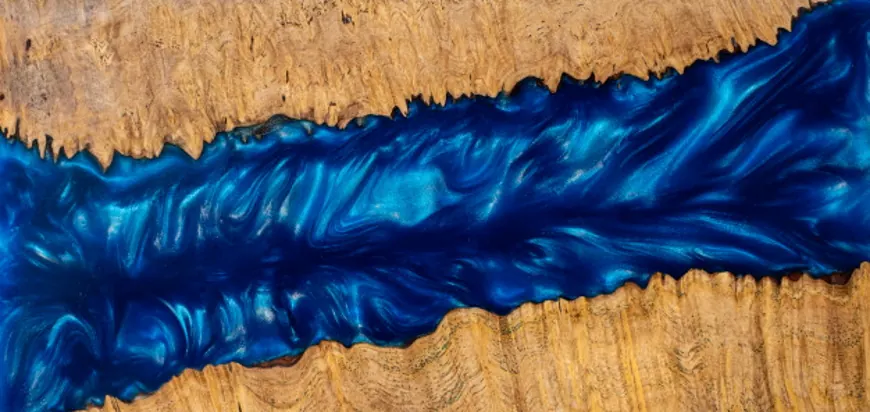
Clear table-top epoxy is a two-component (resin + hardener), solvent-free epoxy resin that cures glass-clear and is used to cast and coat wooden tables, river tables, countertops and bar tops. It comes in two working types: a self-levelling table-top type for thin coats and a casting type for thick, deep pours.
Where is clear table epoxy used?
- River tables and solid-wood tables: gap filling and deep pours,
- Glossy protective coating on table tops, countertops, bars and shelves,
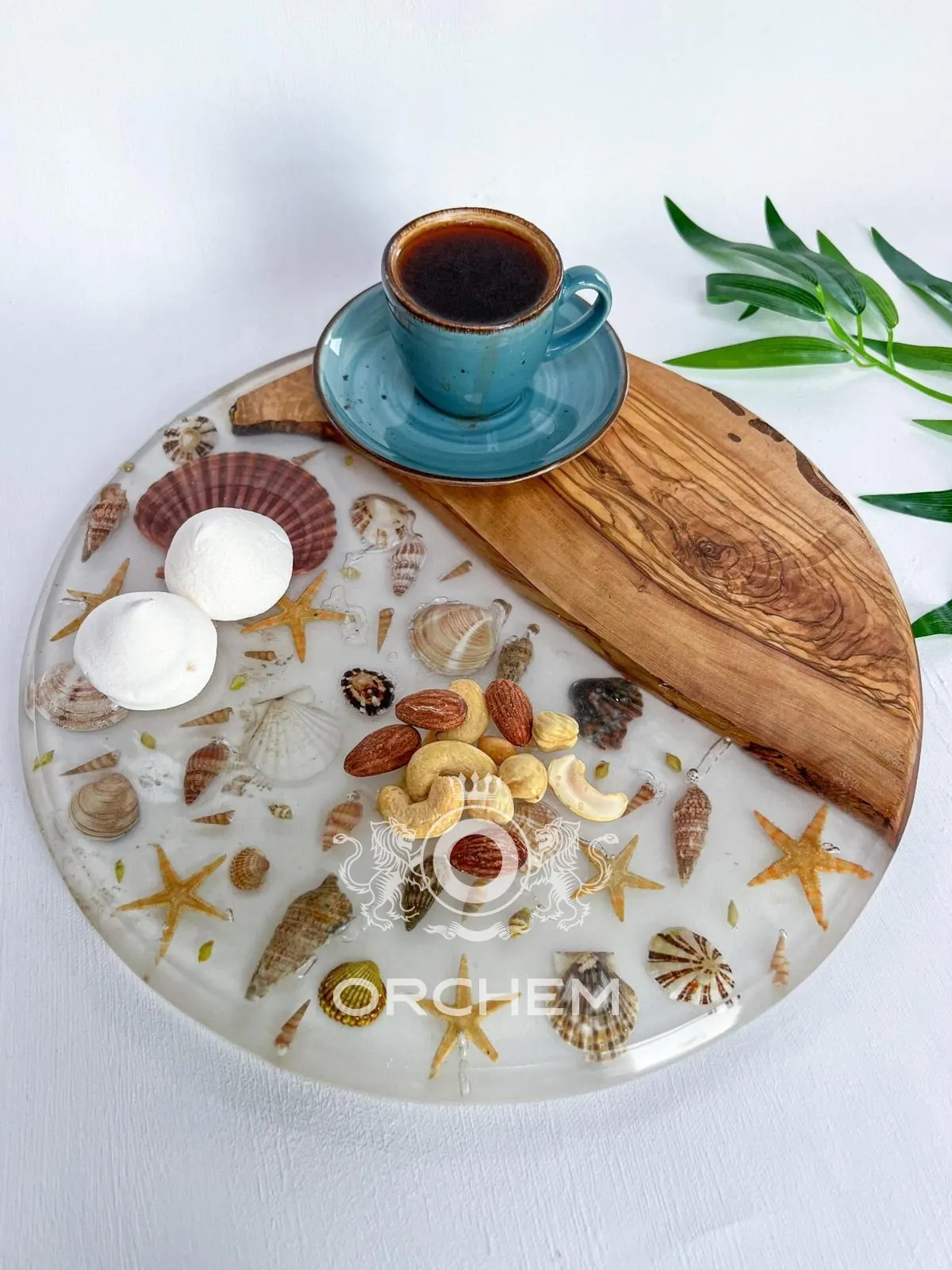
- Coating wood slices, cross-sections and serving trays,
- Resin art, wall panels and decorative surfaces,
- Castings with embedded dried flowers, stones or coins.
Table-top epoxy or casting epoxy?
The table-top (coating) type is designed for thin coats. It has a higher viscosity, levels by itself and cures in about 12–24 hours at room temperature. It suits coating table surfaces, bringing out the wood grain and giving a glossy top coat. Embedding thick objects with this type takes several coats and a lot of time.
The casting (deep pour) type is for thick castings. Its viscosity is lower, air bubbles rise more easily and it cures more slowly, in about 24–36 hours. Slow curing limits heat build-up in a thick mass, which is why this type is preferred for river tables. The maximum thickness per pour is given in the product TDS.
In short: coating a surface, choose the table-top type; pouring several centimetres deep into a mould, choose the casting type. Many river tables use both: the body with the casting type, the final coat with the table-top type.
Properties
- High clarity and gloss: cures glass-clear and glossy, bringing out the colour and grain of the wood.
- Yellowing-resistant formula: formulated to stay clear even in humid conditions.
- Easy mixing ratio: simple to measure and mix, reducing weighing errors.
- Hard, durable surface: scratch- and wear-resistant, easy to maintain.
- Good adhesion to wood: bonds well to porous wood surfaces.
- Solvent-free: contains no solvent that evaporates during cure.
How to use epoxy resin
- Prepare the room: 20–25 °C, dust-free, low humidity. Resin, hardener and wood should be at the same temperature.
- Prepare the wood and mould: the wood must be well dried, sanded and dust-free. Seal the mould, apply release agent and level it with a spirit level.
- Seal the pores: brush a thin seal coat onto the wood first; this prevents air escaping from the wood during the pour.
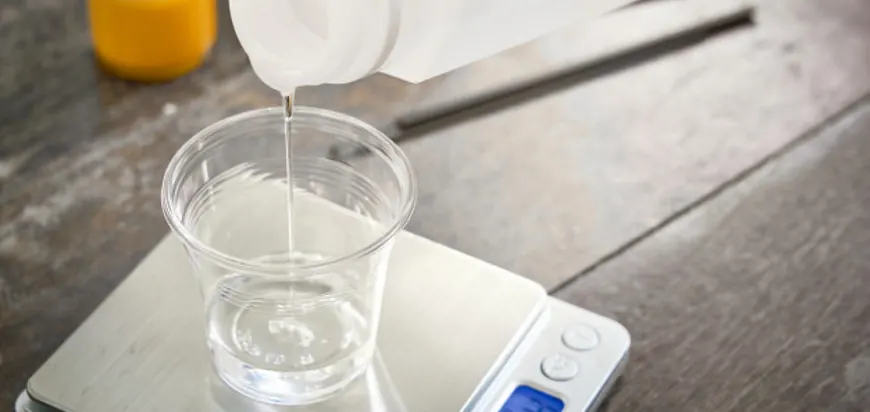
- Weigh: weigh resin and hardener on a scale at the ratio on the pack; never mix by eye.
- Mix: stir slowly for 3–5 minutes, scraping the bottom and sides, without whipping in air. Add pigment at this stage if needed.
- Pour: pour without letting the mix stand. Do not exceed the layer thickness allowed for the product; if necessary pour in layers once the previous layer has gelled.
- Remove bubbles: pop surface bubbles with a heat gun from a distance in short passes, then cover the piece to keep dust off.
- Finish: demould after the cure time, then sand and polish or apply a thin table-top coat.
How long does epoxy take to cure?
At room temperature the table-top type cures in about 12–24 hours and the casting type in about 24–36 hours. Times change with temperature and thickness: longer in the cold, shorter in warmth and in thick masses. Curing continues for several days after the surface hardens, so wait a few days before putting the table into heavy use. Exact values are in the product TDS.
Common mistakes
- Mixing by eye or adding extra hardener to speed things up: the surface stays tacky or yellows.
- Deep pours with the table-top type: the mass overheats, cracks or yellows.
- Pouring onto damp or cold wood: bubbles, cloudiness and poor adhesion.
- Insufficient mixing: soft, uncured spots.
- Not levelling the mould or checking it for leaks.
For jewellery and small moulds see souvenir epoxy; for fast mould castings see liquid polyester resin. All options are on the epoxy resin and resins pages, and for floors see epoxy floor coating. To choose the right type and get the TDS, write to us via the form or WhatsApp.
Questions
How long does clear table epoxy take to cure?
At room temperature the table-top type cures in about 12–24 hours and the casting type in about 24–36 hours. It takes longer in the cold; wait a few more days before heavy use.
Which epoxy is used for a river table?
Thick pours such as river tables need the casting (deep pour) type. Its low viscosity and slow cure reduce bubbles and overheating in a thick mass. The table-top type suits the final coat.
How do I mix epoxy resin?
Weigh resin and hardener on a scale at the ratio on the pack, stir slowly for 3–5 minutes scraping the bottom and sides without whipping in air, and pour straight away.
Why does my epoxy pour have bubbles?
Bubbles mostly come from the pores of the wood and fast stirring. Apply a thin seal coat first, stir slowly, keep materials at 20–25 °C and pop surface bubbles with a heat gun from a distance.
How thick can I pour in one go?
It depends on the type; the exact value is in the product TDS, so request it via the form or WhatsApp. The table-top type is for thin coats; for thick work use the casting type and pour in layers if needed.
Does clear epoxy turn yellow?
The product is formulated to resist yellowing. A wrong mixing ratio, overheated deep pours and long exposure to direct sunlight can change the tone of any epoxy; the right ratio and type keep this risk to a minimum.
Can epoxy be coloured?
Yes. Epoxy-compatible powder or liquid pigments give transparent, translucent or opaque colours. Add pigment during mixing, starting with a small amount.